




Written by the licensed roofing professionals at 3MG Roofing & Solar — Orlando, FL. Updated February 2026.
What Determines Your Roof Replacement Cost in Central Florida?
Seven primary factors determine your roof replacement cost in Central Florida: roof size, material selection, roof pitch and complexity, decking condition, permit and code requirements, the number of roof penetrations, and local labor rates. Understanding each factor helps Orlando and Winter Park homeowners set realistic budgets, evaluate contractor quotes on an informed basis, and avoid surprise costs once the project begins. Here is a detailed breakdown of each factor and how it affects your bottom line, from the local experts at 3MG Roofing & Solar.
How Does Roof Size Affect Replacement Cost?
Roof size is the single biggest cost driver because every other variable — materials, labor, disposal — scales directly with square footage. Roofers measure in roofing squares, where one square equals 100 square feet of roof surface [1]. A typical Orlando home has a roof between 15 and 30 squares, though larger homes in neighborhoods like Windermere, Dr. Phillips, and Winter Park can exceed 40 squares. At $5 to $9 per square foot for architectural shingles installed, the difference between a 1,500-square-foot roof and a 3,000-square-foot roof is roughly $7,500 to $13,500 in total project cost.
Keep in mind that your roof’s square footage is always larger than your home’s living space footprint. Roofs extend past exterior walls as overhangs typically 12 to 24 inches on each side, and roof pitch adds surface area beyond the horizontal footprint — a moderately pitched roof at 6/12 has roughly 12 percent more surface area than the flat footprint it covers. This is why your 2,000-square-foot home may have a 2,400 to 2,800-square-foot roof, and why accurate measurement by your contractor matters more than estimates based on your home’s listed living space.
How Does Material Choice Change Your Roof Cost?
Material selection can swing your total replacement cost by $15,000 or more on the same home. The three primary roofing materials for Orlando homes span a wide price range, and each offers different performance characteristics that affect your long-term return on investment.
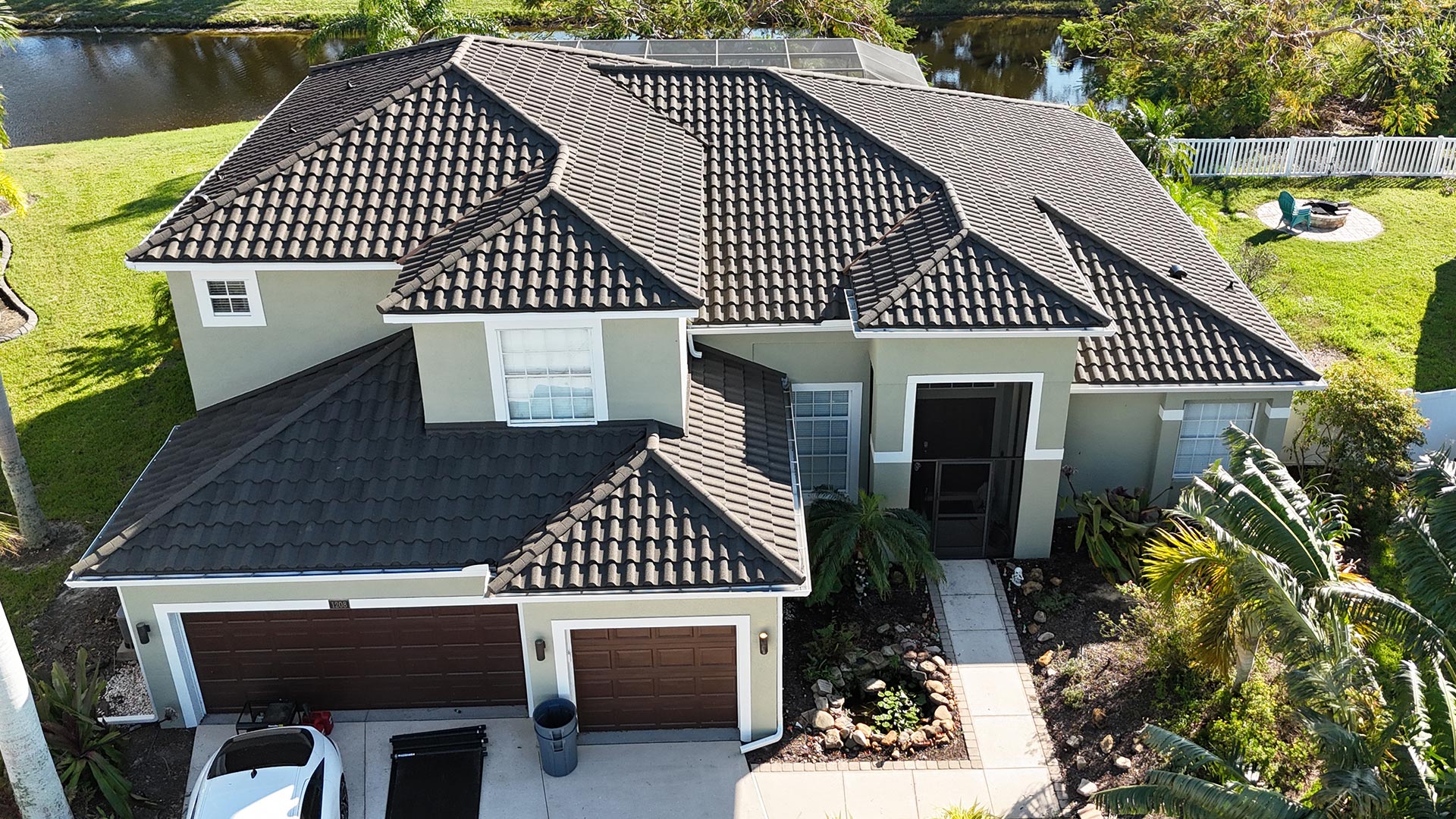
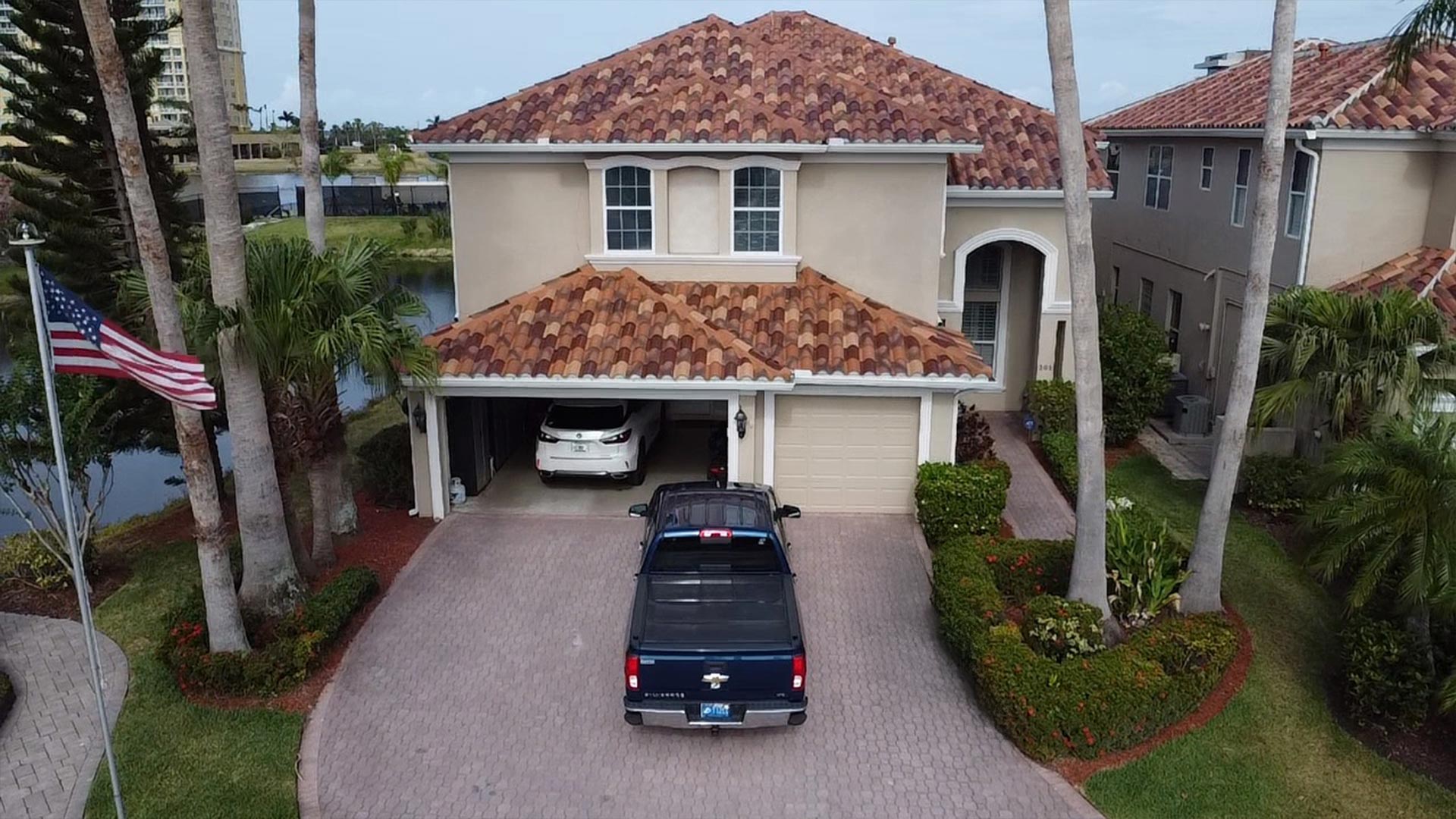
Asphalt architectural shingles are the most affordable option at $5 to $9 per square foot installed, delivering 15 to 20 years of service in Florida’s climate. Metal roofing runs $8 to $23 per square foot depending on the profile — exposed fastener panels at the low end, standing seam at the premium end — and lasts 40 to 70 years. Tile roofing, popular in many Winter Park and Orlando HOA communities, ranges from $10 to $21 per square foot for concrete and clay options with a 30 to 50 year lifespan. When you calculate cost per year of service life, metal and tile often deliver better value despite the higher upfront investment, particularly when you factor in insurance premium reductions and avoided replacement cycles.
How Do Roof Pitch and Complexity Affect Price?
Steeper roofs cost more to replace because they require additional safety equipment including harnesses and roof jacks, slower installation speeds due to reduced footing stability, and more material waste from angled cuts. A roof with a 4/12 pitch or lower is considered walkable and represents the baseline labor cost. Roofs between 5/12 and 7/12 add a moderate premium of roughly 10 to 20 percent to labor. Roofs steeper than 8/12 require specialized equipment, significantly more installation time, and can add 20 to 40 percent to the labor portion of your estimate.
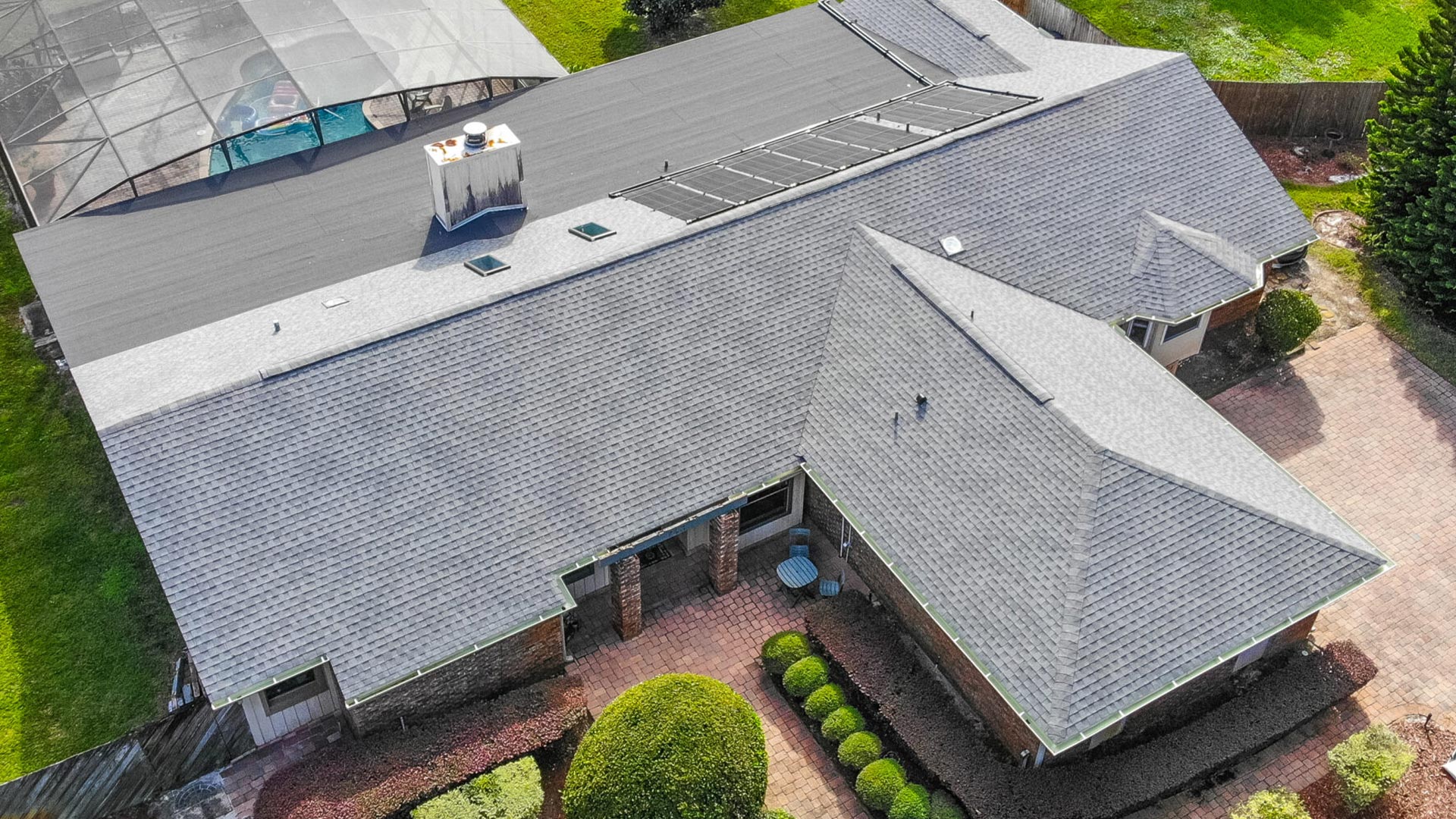
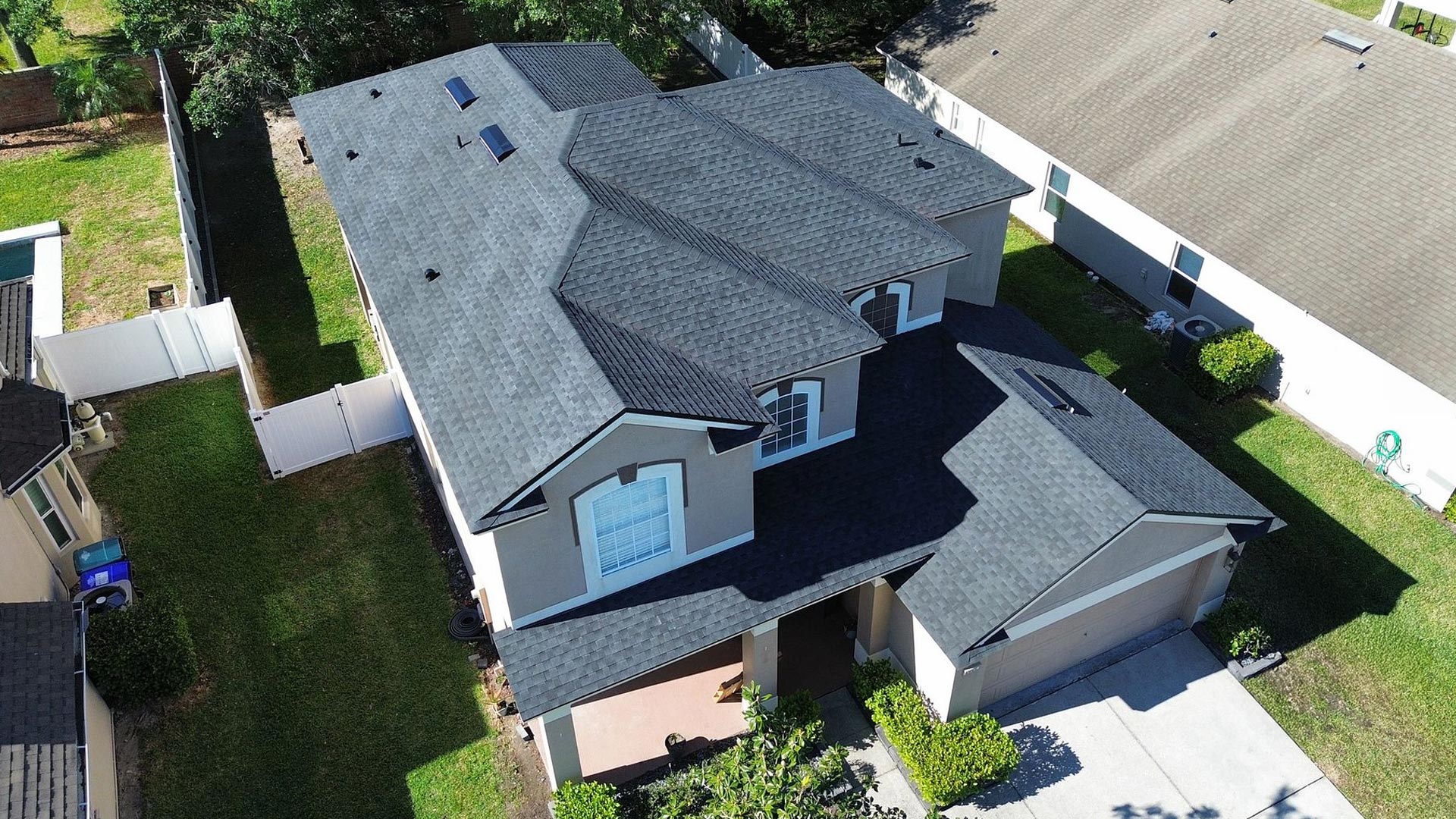
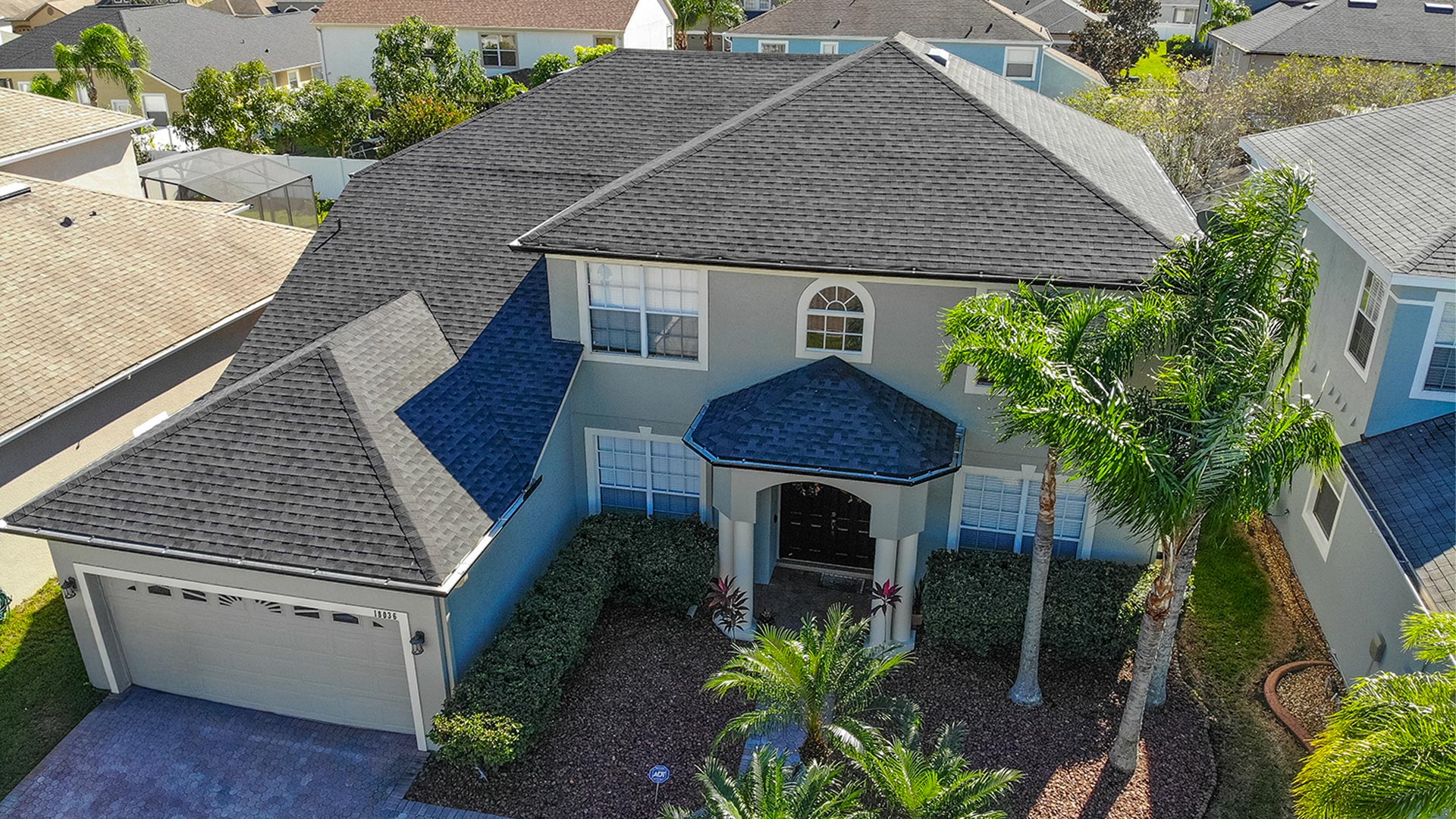
Complexity compounds the pitch factor. A simple rectangular home with a single ridge and two slopes is the least expensive to roof regardless of pitch. Complex roof designs with multiple valleys, hips, dormers, turrets, and plane transitions increase labor costs substantially because each intersection requires detailed flashing work, precise material cuts, and waterproofing attention. An Orlando home with the same square footage but eight roof planes and three dormers will cost significantly more than a straightforward gable or hip roof of the same size. Your contractor’s estimate should reflect your specific roof geometry, not just a generic per-square-foot rate.
Why Does Decking Condition Matter for Your Roof Cost?
Once your old roofing material is removed during tear-off, the plywood or OSB decking underneath must be inspected sheet by sheet for water damage, rot, delamination, and structural integrity. In Central Florida’s humid climate with frequent afternoon thunderstorms, water intrusion through aged or storm-damaged roofing is one of the most common causes of hidden decking deterioration. The damage may be invisible from inside or outside your home until the surface roofing material is stripped away.
Replacing damaged decking sections typically costs $75 to $150 per sheet of plywood or OSB, with most sheets covering a 4-by-8-foot section. Minor damage affecting two to five sheets is common on older Orlando roofs and adds $150 to $750 to the project. Extensive damage requiring replacement of 15 to 30 or more sheets can add $2,000 to $5,000 or more to your total cost. A reputable contractor like 3MG will never install new roofing over compromised decking because it guarantees premature failure and voids manufacturer warranties. If your contractor does not include a provision in their estimate for how decking damage will be handled and priced, ask before signing.
How Do Florida Permits and Building Codes Affect Cost?
Florida law requires building permits for all roof replacements, and Orange County permit fees typically range from $300 to $800 depending on the project scope and your municipality. Beyond the permit fee itself, Florida’s building codes are among the strictest in the nation due to the state’s hurricane exposure [2], and compliance with these codes can add cost that homeowners in other states do not face.
Florida Building Code requires specific underlayment types and installation methods, enhanced nail patterns — six nails per shingle in high-wind zones rather than the four-nail pattern standard in non-hurricane states — wind-rated materials that meet your zone’s minimum wind speed requirement, and secondary water resistance barriers in certain applications. Homes built before the 2007 Florida Building Code may require additional upgrades to meet current standards during a full replacement [3], including improved roof-to-wall connections, enhanced decking attachment, and upgraded flashing systems. These code compliance costs are sometimes covered by ordinance and law coverage in your insurance policy if the replacement is part of a storm damage claim.
How Do Roof Penetrations and Accessories Add to Cost?
Every skylight, chimney, plumbing vent, kitchen and bathroom exhaust vent, satellite dish mount, and solar panel array on your roof adds cost because each penetration requires custom flashing, waterproofing, and careful integration with the surrounding roofing material. A simple roof with four plumbing vents and no other penetrations will cost less to flash than a roof with two skylights, a chimney, eight vents, and a solar array.
Solar panel removal and reinstallation during a roof replacement is one of the more significant add-on costs, typically running $1,500 to $3,000 depending on the system size and mounting type. If your panels are approaching their midlife, this is a good time to evaluate whether to reinstall the existing system or upgrade. Gutter replacement, if your existing gutters are damaged or undersized, typically adds $1,000 to $3,000 when bundled with a roofing project. Skylight replacement or re-flashing adds $500 to $2,000 per skylight. Your contractor’s estimate should itemize each of these accessory costs separately so you can see exactly where your money is going.
How Do Labor Rates and Timing Affect Orlando Roof Pricing?
Orlando and Central Florida roofing labor rates are competitive compared to South Florida markets like Miami and Fort Lauderdale, where the High-Velocity Hurricane Zone requirements add additional labor complexity and material costs. However, pricing in the Orlando market still fluctuates with demand cycles throughout the year. The months immediately following an active hurricane season typically see the highest demand, longest scheduling backlogs, and highest prices as thousands of homeowners compete for limited contractor capacity.
Planning your replacement during the slower winter and early spring months from January through April can sometimes yield better pricing, faster scheduling, and more attentive project management since contractors are not juggling emergency storm response alongside scheduled replacements. The trade-off is minimal — Orlando’s winter weather is mild with low rainfall, making it arguably the best season for roofing work. If your roof can wait until the off-season without putting your home at risk, the scheduling and potential pricing advantages are worth considering.
How Can You Get an Accurate Roof Replacement Estimate?
The only way to get an accurate roof replacement cost is through an in-person inspection by a licensed contractor who measures your roof, assesses its condition, identifies specific challenges, and provides a detailed written estimate based on your actual property. Online roof cost calculators and national average pricing guides cannot account for your specific roof’s pitch, condition, penetrations, or local Florida code requirements. They are useful for ballpark budgeting but should never be relied upon for financial planning.
3MG Roofing & Solar offers free, no-obligation roof inspections for Orlando and Winter Park homeowners with detailed written estimates that break down every cost component including materials, labor, permits, disposal, and all accessories. We explain each line item so you understand exactly what you are paying for and can compare our estimate directly against other contractors’ proposals.
Frequently Asked Questions
Why do roofing quotes vary so much between Orlando contractors?
Quotes vary because contractors may specify different material grades and brands, include or exclude items like permits, disposal, drip edge, and ice and water shield, use different labor rates reflecting their overhead and crew quality, and account for different levels of warranty coverage. Always compare detailed line-item estimates rather than just bottom-line numbers, and ask each contractor to explain any significant differences between their quote and others you have received.
Does roof pitch affect insurance rates in Florida?
Roof shape affects insurance more than pitch. Hip roofs, which have slopes on all four sides that resist wind uplift better than gable roofs, often qualify for insurance discounts [4] on the wind portion of your Florida homeowners policy. Your wind mitigation inspection documents roof geometry among other features, and the resulting report determines your specific discount eligibility.
Should I replace all my decking during a roof replacement?
Only damaged sections need replacement in most cases. However, if your home is older and the inspection reveals moisture damage across 30 percent or more of the decking, replacing the entire deck ensures a uniform foundation for your new roof and eliminates the risk of remaining compromised sections failing beneath new materials. Your contractor should photograph and show you any decking damage discovered during tear-off and explain the repair options before proceeding.
Is it cheaper to replace a roof in winter in Orlando?
Pricing is not dramatically lower in winter, but you may find more scheduling flexibility, shorter lead times, and occasionally better pricing due to reduced demand. The biggest advantage of winter replacement in Orlando is the dry, mild weather that minimizes rain delays and creates ideal installation conditions. If your roof can safely wait for the January through April window, it is worth scheduling during this period.
References
- National Roofing Contractors Association. “Roofing Glossary of Terms.” nrca.net
- Florida Building Code, 7th Edition. “High-Velocity Hurricane Zone Requirements.” floridabuilding.org
- Florida Building Commission. “Florida Building Code Evolution.” floridabuilding.org
- Insurance Institute for Business & Home Safety. “Roof Shape: Hip vs. Gable.” ibhs.org