
How to choose reliable roofing companies in Altamonte Springs, FL
Homeowners in Altamonte Springs should verify Florida state roofing licenses through DBPR, confirm general liability and workers’ compensation coverage, and request manufacturer certifications like GAF Master Elite status. Local presence with a physical office in Central Florida reduces warranty service gaps and storm-chaser risks common after hurricanes.
3MG Roofing & Solar provides shingle, metal, tile, and solar roofing in Altamonte Springs, FL, Orlando, and the surrounding areas.
Written by the licensed roofing professionals at 3MG Roofing & Solar — Florida Licensed Roofing Contractor (Florida DBPR), GAF Master Elite, GAF President’s Club (Top 2% Nationwide), BBB Accredited A+. Headquartered in Winter Park, FL, serving Central Florida homeowners and commercial properties since 2008.
How Should You Evaluate Roofing Companies in Altamonte Springs, FL?
Hiring an unqualified roofing contractor in Altamonte Springs can void manufacturer warranties, create hidden leaks that surface years later, and leave homeowners with no recourse if the contractor disappears after final payment. The Florida Department of Business and Professional Regulation (DBPR) processes hundreds of complaints annually against unlicensed contractors who fail to correct defective work or abandon jobs mid-project.[1]
A thorough evaluation starts with written documentation. Request the contractor’s Florida state roofing license number and verify it directly through the DBPR website — the license should be active with no disciplinary actions or suspensions. Confirm general liability insurance well above the state minimum of $300,000 — most reputable contractors carry $1 million or more and workers’ compensation coverage for all employees. Many homeowners skip this verification step and later discover they are personally liable if an uninsured worker is injured on their property.
Manufacturer certifications indicate technical competency and financial stability. GAF Master Elite contractors, for example, must maintain a minimum credit score, demonstrate a track record of quality installations, and pass annual inspections to retain certification.[2] This third-party vetting eliminates contractors who operate on thin margins and may not survive the next economic downturn. In Altamonte Springs, where HOA-governed condo communities represent a significant share of roofing projects, manufacturer certifications often determine which contractors can bid on multi-building contracts.
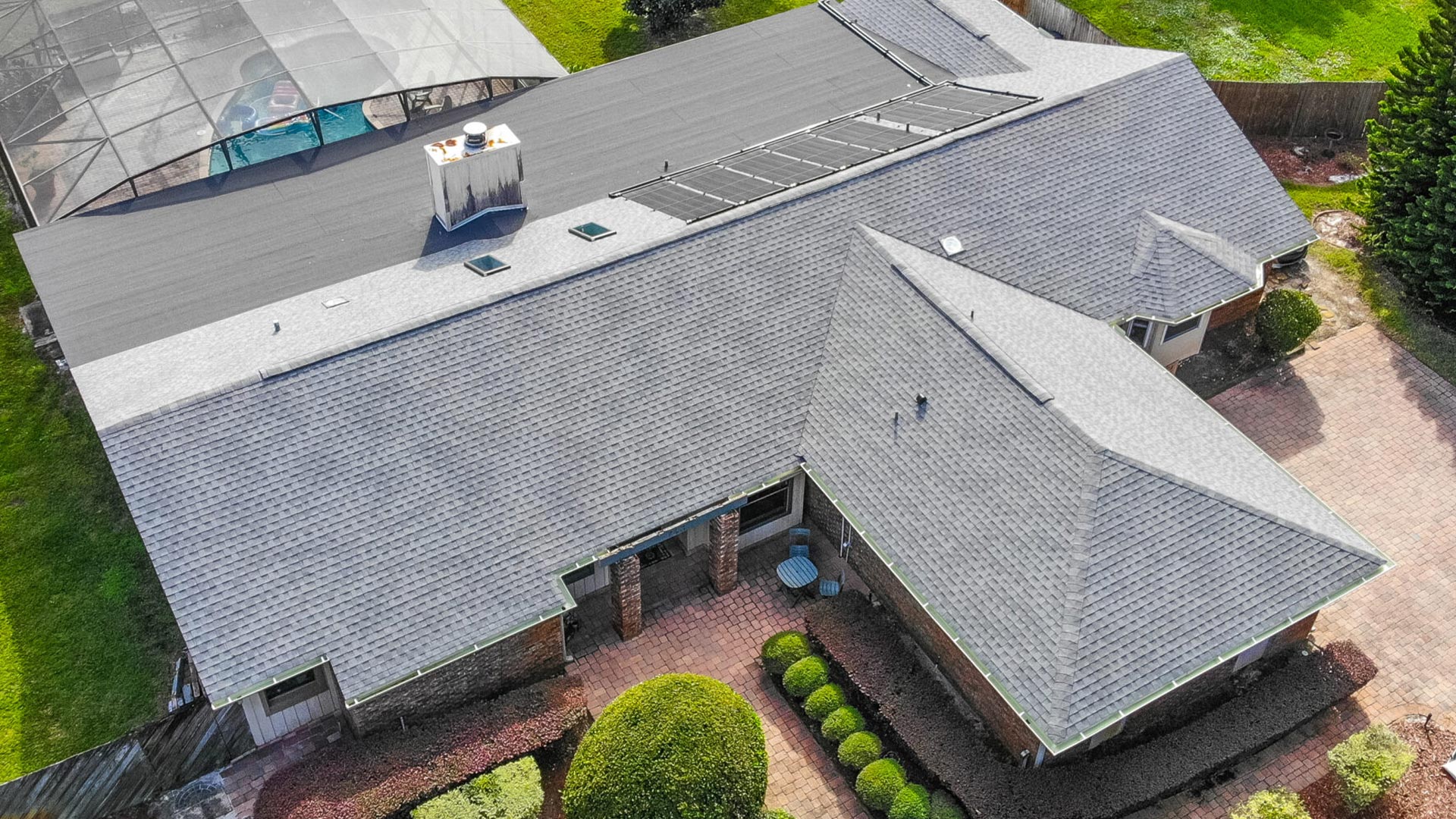
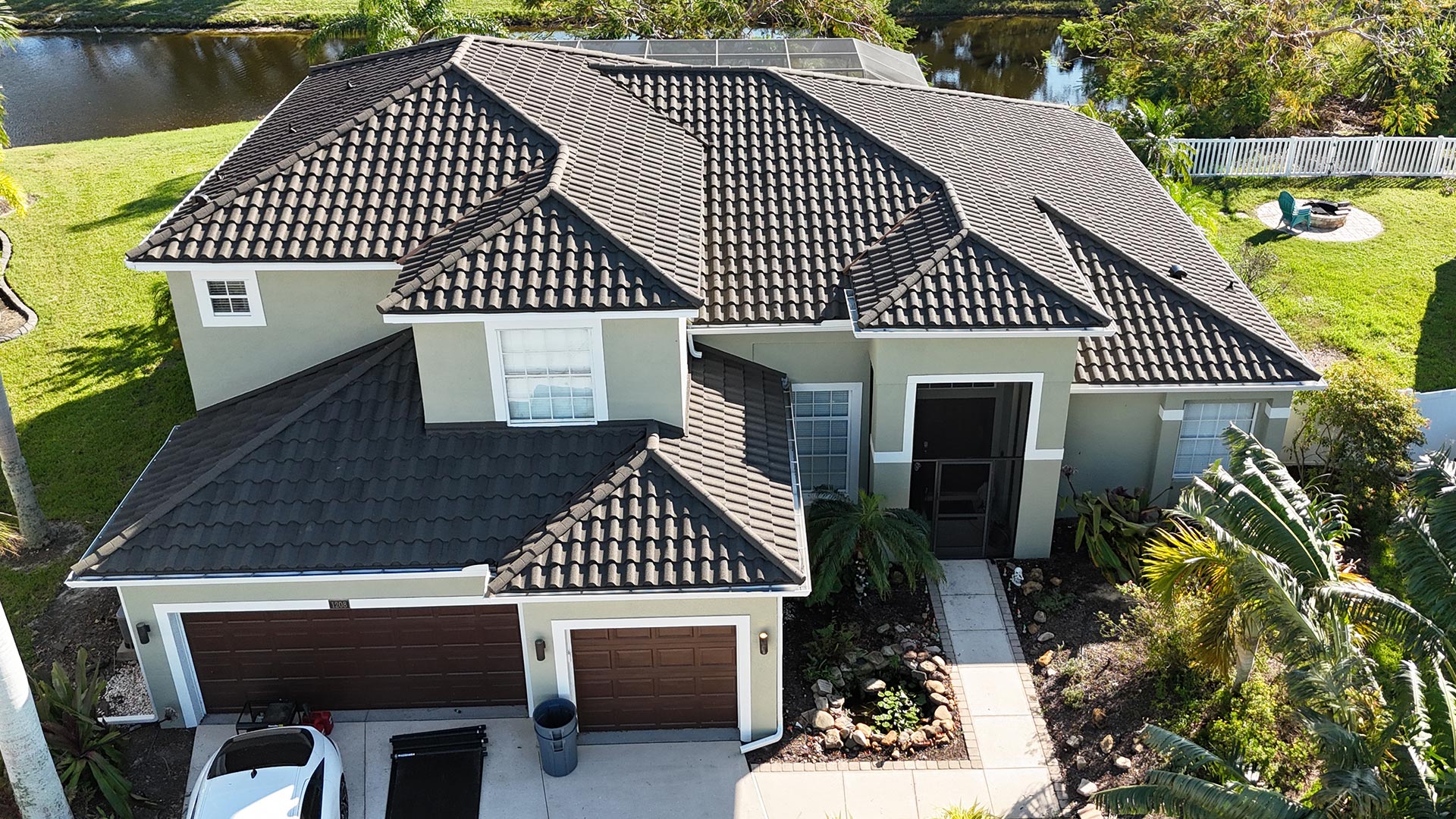
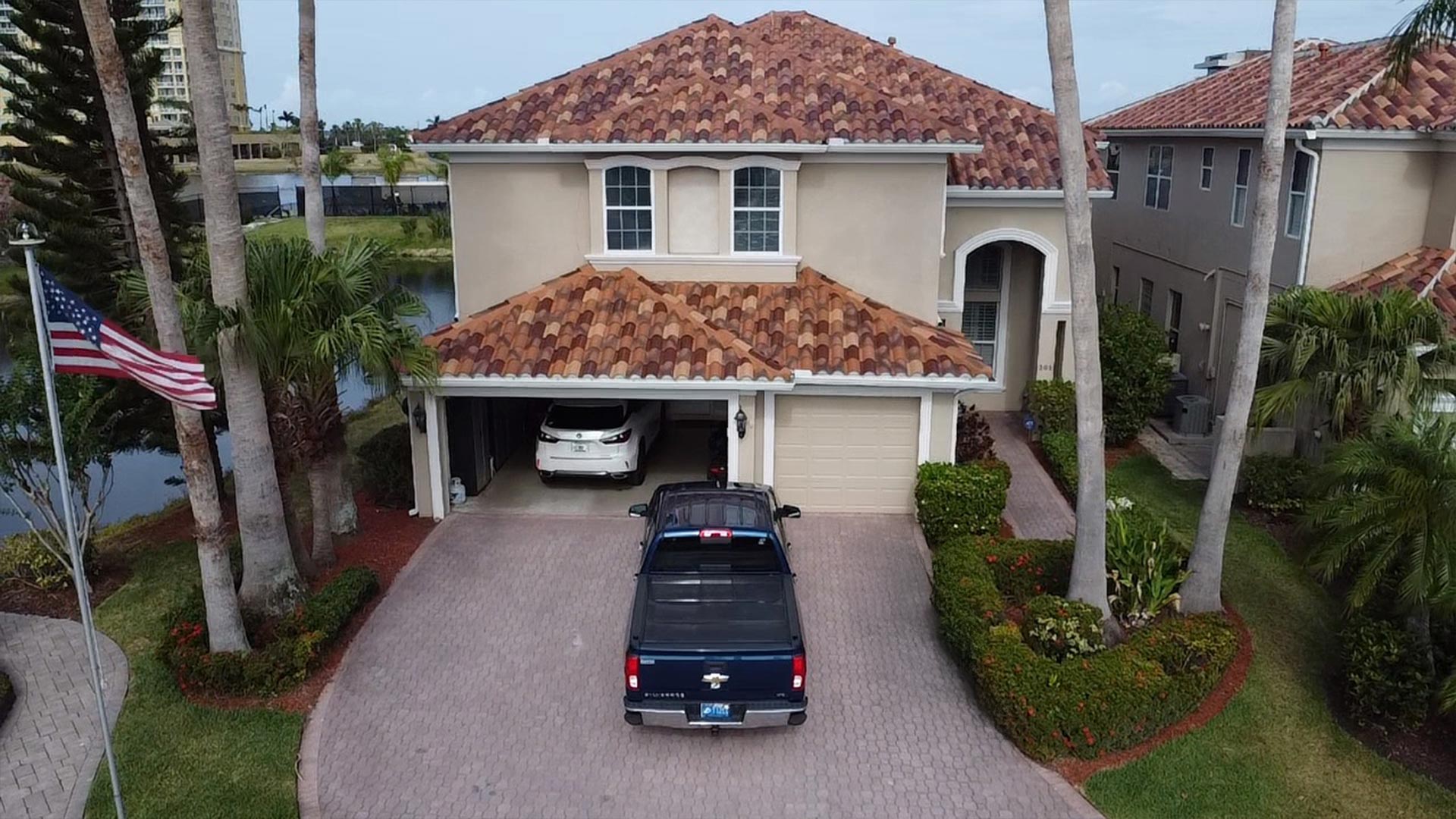
Check references specific to your roof type. If you have a tile roof common in Altamonte Springs’ 1980s neighborhoods, ask for tile-specific references and photos of completed work. A contractor skilled in shingle replacement may lack experience with barrel tile underlayment requirements or proper flashing around tile ridges.
What Licensing Should an Altamonte Springs Roofing Contractor Hold?
Florida law requires all roofing contractors to hold either a state-certified roofing contractor license (CCC) or a registered roofing contractor license (CRC) issued by the Florida Department of Business and Professional Regulation. The CCC license qualifies contractors to work statewide without local approval; the CRC license requires approval in each municipality where work is performed.[1]
The licensing process includes a business and finance examination, a four-hour trade examination covering the Florida Building Code, and proof of two years of experience in the roofing trade. Applicants must submit financial statements and pass a credit check to demonstrate they can fulfill contractual obligations. This barrier filters out undercapitalized operators who collect deposits and disappear when material costs rise mid-project.
Beyond state licensing, verify insurance coverage directly with the contractor’s insurance carrier. Request a Certificate of Insurance (COI) naming you as an additional insured. The COI should list general liability coverage, workers’ compensation for all employees, and commercial auto coverage for company vehicles. Many Altamonte Springs homeowners assume that a licensed contractor automatically carries adequate insurance, but licenses and insurance are separate requirements enforced by different agencies.
Manufacturer certifications add a third layer of credibility. GAF Master Elite status requires a minimum of three years in business, a proven track record of quality installations, and ongoing training on the latest installation techniques and building code changes. Owens Corning Platinum Preferred contractors meet similar standards and can offer extended warranty coverage unavailable through non-certified installers.[2] In Florida’s high-wind zones, where the Florida Building Code mandates enhanced fastening schedules, manufacturer-certified contractors are trained on the specific nail patterns and adhesive strips required to achieve rated wind resistance.
| Credential | Issuing Body | What It Verifies |
|---|---|---|
| CCC or CRC License | Florida DBPR | Legal authority to perform roofing work in Florida; passage of trade and business exams |
| General Liability Insurance | Licensed insurance carrier | Coverage for property damage during installation; minimum $1M recommended |
| Workers’ Compensation | Licensed insurance carrier | Protects homeowner from liability if worker is injured on property |
| GAF Master Elite | GAF Materials Corporation | Technical competency, financial stability, minimum 3 years in business |
| BBB Accreditation | Better Business Bureau | Track record of complaint resolution and ethical business practices |
Why Does Local Presence Matter When Hiring an Altamonte Springs Roofing Company?
Roofing contractors with a physical office in Central Florida are available for warranty service calls, emergency repairs after summer storms, and long-term relationship management that out-of-state storm chasers cannot provide. After Hurricane Irma in 2017 and Hurricane Ian in 2022, Altamonte Springs homeowners reported hundreds of cases where fly-by-night contractors collected deposits, performed substandard work, and disappeared when called back to address leaks or wind damage.[3]
A local contractor maintains relationships with building inspectors in Seminole County and understands permit requirements specific to Altamonte Springs’ municipal codes. Permit applications require detailed engineering drawings, wind-load calculations, and product specifications that vary by jurisdiction. A contractor familiar with local building departments can expedite approvals and avoid costly delays when inspectors flag non-compliant details.
Warranty service is the most common failure point with non-local contractors. Manufacturer warranties cover material defects, but workmanship warranties are the contractor’s responsibility. If a tile ridge cap cracks three years after installation or a valley flashing leaks during heavy rain, you need the original installer to return and honor the workmanship warranty. Out-of-state contractors rarely respond to service calls once they’ve moved on to the next hurricane zone. In Altamonte Springs, where multi-family condo communities often have ten-year workmanship warranty requirements, local presence is not optional — it’s contractually mandated.
Local contractors also carry relationships with material suppliers that can expedite emergency repairs. After a windstorm tears off shingles, a contractor with established accounts at Bradco Supply or ABC Supply can secure temporary tarps and replacement materials within hours rather than days. This speed prevents secondary water damage to ceilings, insulation, and interior finishes that insurance adjusters often exclude from initial claims.
What Red Flags Should Altamonte Springs Homeowners Watch For?
Door-to-door solicitation after storms, pressure to sign Assignment of Benefits (AOB) agreements before insurance adjusters inspect damage, and vague lump-sum quotes without itemized material and labor breakdowns are immediate disqualifiers. Florida’s 2022 AOB reform under Senate Bill 76 was enacted specifically to address contractor abuse of AOB agreements, where contractors inflated claims and sued insurance carriers, driving up premiums for all Florida homeowners.[4]
Assignment of Benefits agreements transfer your insurance claim rights to the contractor, giving them authority to negotiate directly with your carrier and file lawsuits in your name if the claim is disputed. While AOBs are legal, signing one before an adjuster inspects the damage removes your ability to dispute inflated line items or unnecessary repairs. Ethical contractors provide free inspections and estimates, then wait for your insurance adjuster to assess damage before discussing scope of work.
Vague pricing is another warning sign. A written estimate should itemize the cost of tear-off and disposal, roof decking replacement (with a per-sheet price for plywood or OSB), underlayment type and coverage, shingle or tile brand and model number, and labor costs separated by task. Lump-sum quotes like “$12,000 to replace your roof” prevent you from comparing bids and hide padding that benefits the contractor when material costs come in lower than projected.
Missing written contracts are a regulatory violation. Florida law requires all home improvement contracts over $2,500 to be in writing and include the contractor’s license number, a detailed description of work, a payment schedule tied to completion milestones, and a three-day right-of-rescission notice.[1] Contractors who ask for cash deposits without a signed contract are operating illegally and give you no recourse if they abandon the job or perform defective work.
Finally, avoid contractors who discourage permit applications. Permits exist to ensure code compliance and protect resale value. Unpermitted roof replacements can complicate future home sales, void homeowner’s insurance policies, and create liability if wind damage occurs because fastening schedules did not meet High Velocity Hurricane Zone (HVHZ) requirements. In Altamonte Springs, all roof replacements require a building permit from Seminole County, and inspectors verify that installations meet the Florida Building Code’s 140-mph wind speed requirements for this region.[5]
What Are Altamonte Springs-Specific Roofing Considerations?
Altamonte Springs is an established Seminole County retail-and-office hub with housing stock ranging from 1970s to 1990s single-family neighborhoods to mid-rise condo communities and newer infill developments, creating a roofing market split between aging asphalt shingles nearing replacement and HOA-governed multi-family properties requiring coordinated phasing and architectural review board approvals.
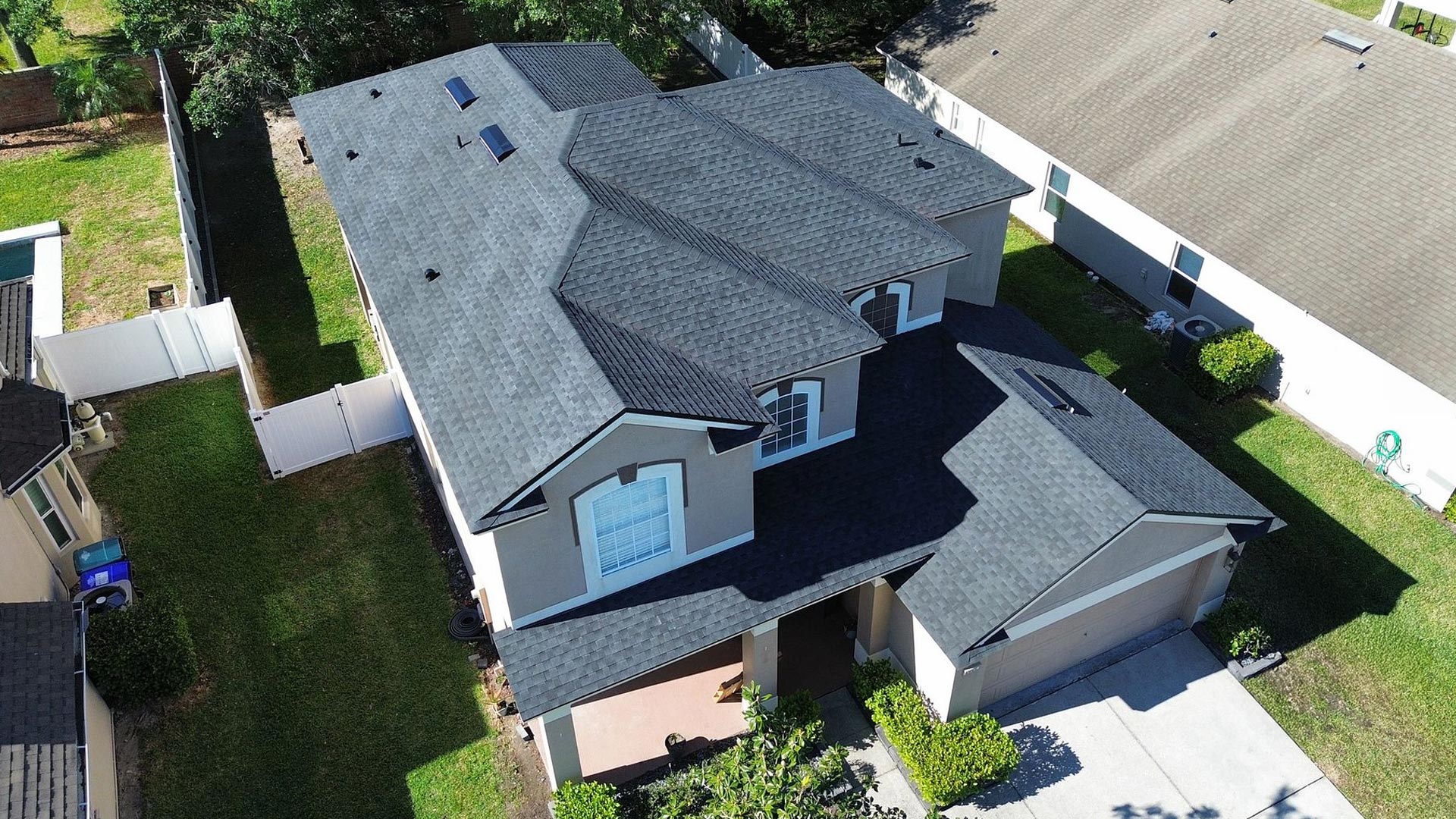
The city’s 1970s and 1980s neighborhoods often feature original three-tab asphalt shingles or concrete tile roofs that have exceeded their 20- to 30-year service life. Shingle roofs from this era used organic felt underlayment that deteriorates faster than modern synthetic underlayment, and many homeowners discover rotted decking during tear-off. Budget an additional $75 to $95 per sheet for plywood or OSB decking replacement if your roof is more than 25 years old — this is not a markup; it’s a necessary repair to meet code.
Mid-rise condo communities present logistical challenges. Multi-building projects require staging areas for dumpsters and material deliveries, coordination with property management to notify residents of noise and restricted parking, and phased installation schedules that minimize disruption. HOA architectural review boards often mandate specific shingle colors, tile profiles, or metal panel finishes to maintain neighborhood aesthetic consistency. Contractors inexperienced with HOA processes can delay projects by weeks when they submit non-compliant material samples or fail to provide required certificates of insurance naming the HOA as an additional insured.
Florida Building Code wind speed requirements also influence material selection. Altamonte Springs falls within the 130-140 mph design wind speed zone, requiring enhanced fastening schedules for shingles (six nails per shingle in the field, with specific nail placement in the adhesive strip zone) and mechanically-attached underlayment for tile roofs.[5] Insurance carriers increasingly require proof of code-compliant installation before issuing wind coverage, and some carriers offer premium discounts for Impact-Resistant (IR) shingles rated Class 4 under UL 2218 testing. In hail-prone Central Florida, IR shingles reduce the likelihood of granule loss and premature aging after severe weather.
Need help evaluating roofing companies for your Altamonte Springs home or commercial property? Call (407) 832-3403 or visit https://3mg.com/estimate/ for a free roof inspection with detailed written estimates and code compliance verification.
What Roofing Services Are Available in Altamonte Springs?
Licensed roofing contractors in Altamonte Springs offer residential shingle and tile replacement, commercial low-slope membrane systems, solar panel integration, and insurance claim assistance for wind and hail damage. Service availability varies by contractor specialization and licensing — residential-focused contractors may lack the commercial bonding and equipment required for flat-roof projects, while commercial specialists may not carry the manufacturer certifications needed for residential warranty upgrades.
Residential roofing services include asphalt shingle replacement (architectural and three-tab profiles), concrete and clay tile installation, metal roofing (standing seam and metal shingle profiles), and synthetic slate for historic home applications. Each material has specific code requirements for underlayment, fastening, and flashing that influence total project cost. Asphalt shingles are the most cost-effective option at $350 to $550 per square installed, while concrete tile ranges from $800 to $1,200 per square due to heavier structural requirements and specialized labor.[6]
Commercial roofing services address the flat and low-slope roofs common on Altamonte Springs’ retail centers and office buildings. TPO (thermoplastic polyolefin) and EPDM (ethylene propylene diene monomer) membranes dominate the commercial market due to their heat-reflective properties and long service life. Flat-roof installations require different skill sets than sloped residential work — heat-welded seams for TPO, proper drainage design to prevent ponding water, and coordination with HVAC contractors when rooftop units must be temporarily removed during tear-off.
Solar integration is growing in Altamonte Springs as utility rates rise and federal tax incentives make photovoltaic systems more affordable. Roof-mounted solar installations require structural engineering to verify that trusses can support the added load, flashing details that prevent water intrusion around mounting hardware, and coordination between the roofing contractor and solar installer to ensure warranty coverage. Some roofing contractors hold dual licenses for roofing and solar, streamlining the permitting process and creating a single point of accountability for both the roof and the solar array.
Insurance claim assistance is a specialized service where roofing contractors document storm damage, meet with insurance adjusters, and provide detailed estimates that align with Xactimate pricing software used by carriers. Florida homeowners often underestimate the complexity of insurance claims — adjusters may overlook wind-damaged ridge caps, fail to account for code-required upgrades like enhanced underlayment, or depreciate materials based on age rather than replacement cost. Experienced contractors identify these gaps and provide supplemental documentation that maximizes claim payouts within policy limits.[7]
Frequently Asked Questions
How much does a roof replacement cost in Altamonte Springs, FL?
Asphalt shingle roof replacements in Altamonte Springs typically range from $350 to $550 per square (100 square feet) installed, depending on shingle grade, decking repairs, and permit fees. Concrete tile roofs cost $800 to $1,200 per square due to structural reinforcement requirements and specialized labor.
Do I need a permit to replace my roof in Altamonte Springs?
Yes, Seminole County requires building permits for all roof replacements in Altamonte Springs. Permits ensure compliance with Florida Building Code wind load requirements, verify proper flashing and underlayment installation, and protect your home’s resale value and insurance coverage.
How long does a roof replacement take in Altamonte Springs?
Most residential roof replacements in Altamonte Springs take two to five days, depending on roof size, complexity, weather delays, and the extent of decking repairs. Multi-family condo projects may take several weeks due to phased scheduling and HOA coordination requirements.
What roofing material is most common in Altamonte Springs?
Architectural asphalt shingles are the most common roofing material in Altamonte Springs due to their balance of cost, durability, and wind resistance. Concrete tile is prevalent in older neighborhoods, while metal roofing is gaining popularity for its long lifespan and energy efficiency.
Will insurance cover my roof replacement in Altamonte Springs?
Insurance covers roof replacement if damage results from a covered peril like wind, hail, or falling trees. Age-related wear, improper maintenance, and cosmetic issues are typically excluded. An experienced contractor can document storm damage and work with your adjuster to maximize claim coverage within policy limits.
- Orlando-area roofing services and service area overview
- Roofing Companies in Winter Park, FL: Local Contractor Guide
- Roof Replacement Cost in Orlando: 2026 Pricing Guide
- Florida Roof Insurance Claim Guide: How to Document Storm Damage
- Roofing Materials in Orlando: Shingle, Tile, and Metal Comparison
- 3MG Roofing & Solar Customer Reviews and Testimonials
Choosing the right roofing company in Altamonte Springs protects your investment and ensures code-compliant work that withstands Florida’s demanding climate. Verify licensing, check references, and prioritize local contractors with manufacturer certifications and proven warranty service. For a free inspection and detailed written estimate, call (407) 832-3403 or visit https://3mg.com/estimate/.
Find 3MG Roofing & Solar on Google Maps for directions to our Winter Park office, or call (407) 832-3403 to schedule your free roof inspection in Altamonte Springs.
Written by the licensed roofing professionals at 3MG Roofing & Solar, headquartered in Winter Park, FL. Updated May 2026.
Address: 1127 Solana Avenue, Winter Park, FL 32789
Phone: (407) 832-3403
Hours: Monday-Friday, 8:00 AM – 5:00 PM
Service Area: Altamonte Springs and the Greater Orlando metro
Reviews: Read our 658+ Google reviews
References
- Florida Department of Business and Professional Regulation (DBPR). https://www.myfloridalicense.com/DBPR/
- GAF Materials Corporation. GAF Master Elite Contractor Program. https://www.gaf.com/
- National Oceanic and Atmospheric Administration (NOAA). National Hurricane Center Historical Data. https://www.nhc.noaa.gov/
- Florida Senate Bill 76 (2021). Assignment of Benefits Reform. https://www.flsenate.gov/
- Florida Building Code. High Velocity Hurricane Zone Requirements. https://floridabuilding.org/
- National Roofing Contractors Association (NRCA). Roofing Material Cost Data. https://www.nrca.net/
- Insurance Information Institute. Homeowners Insurance Claims Guide. https://www.iii.org/