

Roofing Companies in Isleworth, FL: Licensing, Credentials, and Local Presence Matter
Homeowners in Isleworth, FL should evaluate roofing contractors based on Florida state licensing, manufacturer certifications, physical office location, and demonstrated experience with high-value custom homes. 3MG Roofing & Solar holds a Florida state roofing license, GAF Master Elite certification, and operates from a permanent office in Winter Park, serving Isleworth’s estate properties since 2010.
3MG Roofing & Solar provides shingle, metal, tile, and solar roofing in Isleworth, FL, Orlando, and the surrounding areas.
Written by the licensed roofing professionals at 3MG Roofing & Solar — Florida Licensed Roofing Contractor (Florida DBPR), GAF Master Elite, GAF President’s Club (Top 2% Nationwide), BBB Accredited A+. Headquartered in Winter Park, FL with over 15 years serving Central Florida’s residential and commercial roofing needs.
How Do You Evaluate Roofing Companies in Isleworth, FL?
The cost of hiring the wrong roofing contractor extends far beyond initial project delays — homeowners risk voided manufacturer warranties, hidden water intrusion that surfaces years later, and no legal recourse if the contractor dissolves or leaves the state. In Isleworth’s high-value real estate market, where estate homes frequently exceed $2 million and roof replacements routinely cost $75,000 to $150,000 for tile or slate systems, due diligence during contractor selection protects both immediate investment and long-term property value.[1]
Begin your evaluation by requesting the contractor’s Florida state roofing license number and verifying active status through the Florida Department of Business and Professional Regulation (DBPR) online portal.[2] A valid state license confirms the contractor passed written examinations on Florida Building Code requirements, maintains required insurance coverage, and submits to state disciplinary oversight. Next, ask for certificates of insurance showing current general liability coverage — the state minimum is $300,000 per occurrence, though most reputable contractors carry $1 million or more and valid workers’ compensation insurance for all crew members — these protect you from liability if workers are injured on your property or if property damage occurs during installation.
Review the contractor’s manufacturer certifications. GAF Master Elite and Owens Corning Platinum Preferred designations require contractors to meet financial stability thresholds, maintain minimum customer satisfaction scores, and complete ongoing technical training.[3] These certifications also unlock extended warranty coverage — GAF’s System Plus warranty extends material coverage to 50 years and includes workmanship coverage up to 25 years, compared to standard 10-year labor warranties from non-certified installers.
Request a detailed written proposal that itemizes material specifications by manufacturer name and product line, labor costs broken down by removal and installation phases, permit fees, disposal costs, and warranty terms. Vague lump-sum bids that list only a total dollar figure prevent you from comparing proposals on equal terms and often conceal cost-cutting shortcuts in material quality or installation methods.
What Licensing Should a Roofing Contractor in Isleworth Hold?
Florida law requires all roofing contractors performing work valued over $1,000 to hold either a state-certified roofing contractor license (valid statewide) or a registered contractor license (valid only within the issuing municipality). For Isleworth residents, only state-certified contractors can legally perform work, as the community falls under Orange County’s jurisdiction, which does not issue separate municipal roofing licenses.[2]
The Florida Department of Business and Professional Regulation issues state roofing licenses after applicants demonstrate four years of verifiable experience, pass a two-part examination covering business and finance plus Florida Building Code compliance, and provide proof of financial responsibility through surety bonds or credit reports. Licenses require annual renewal and continuing education credits — contractors who let their licenses lapse or accumulate disciplinary actions appear in searchable public records on the DBPR website.
Beyond state licensing, insurance coverage determines whether a contractor can financially respond to accidents or defects. Florida law requires roofing contractors to carry general liability insurance, but workers’ compensation requirements depend on employee count — corporations with fewer than three officers may obtain exemptions.[2] However, homeowners assume significant risk when hiring contractors without workers’ compensation coverage, as injured workers can file liens against the property owner’s home if the contractor cannot pay medical costs. Always request current certificates of insurance naming you as an additional insured party, and verify coverage directly with the insurance carrier using the policy number and agent contact information listed on the certificate.
Manufacturer certifications provide an additional credibility layer. GAF’s Master Elite program accepts fewer than 3% of roofing contractors nationwide and requires applicants to maintain proper licensing, carry minimum insurance limits, demonstrate a track record of customer satisfaction, and complete product-specific training.[3] Master Elite contractors can offer enhanced warranties that cover both materials and labor, whereas standard manufacturer warranties cover only defective shingles and explicitly exclude installation errors.

Why Does Local Presence Matter When Hiring a Roofing Company in Isleworth?
A contractor’s physical office location and operational history in Central Florida directly impact warranty service availability, permitting knowledge, and legal accountability years after project completion. Out-of-state storm-chasing contractors who arrive after hurricanes and operate from temporary offices or hotel rooms routinely complete installations, collect final payments, and leave the region before homeowners discover workmanship defects or file warranty claims.[4]
Local contractors maintain permanent offices, invest in ongoing employee training, and build reputations through repeat business and referrals within defined service areas. When roof leaks appear three years after installation due to improperly sealed flashings, locally-based contractors can dispatch crews for warranty repairs without the delays and communication breakdowns common with distant or dissolved businesses. Florida’s transient contractor problem intensified after Hurricane Ian in 2022, when the state issued over 2,500 emergency roofing licenses to out-of-state contractors — many of whom completed substandard work and departed before homeowners could pursue legal remedies.[5]
Local contractors also navigate municipal permitting and HOA architectural review processes more efficiently. Orange County requires structural calculations and engineering stamps for roof replacements that alter structural loading or exceed specific weight thresholds, and Isleworth’s architectural review committee mandates pre-approval for all exterior modifications, including roofing material changes. Contractors unfamiliar with these requirements often submit incomplete permit applications, causing project delays of several weeks while revised documents move through approval channels.
Verify local presence by visiting the contractor’s listed office address, confirming the business appears in county property records or commercial lease databases, and checking the Better Business Bureau profile for complaint history and resolution patterns. Contractors operating from residential addresses or P.O. boxes may lack the operational infrastructure to support long-term warranty obligations.
Need a licensed contractor with a permanent Central Florida office? Call (407) 832-3403 or visit https://3mg.com/estimate/ for a free roof inspection.
What Red Flags Should Isleworth Homeowners Watch For?
Unsolicited door-to-door roofing solicitations following storms, pressure tactics involving Assignment of Benefits (AOB) insurance documents, and requests for large upfront deposits before work begins signal high-risk contractor behavior. Storm chasers who canvass neighborhoods after weather events often promise to “handle all insurance paperwork” while pressuring homeowners to sign AOB agreements that transfer insurance claim control to the contractor — a practice heavily restricted under Florida’s 2022 AOB reform law (SB 2-A).[6]
Assignment of Benefits agreements allow contractors to negotiate directly with insurance companies and collect claim payments without homeowner oversight. While legitimate uses exist, unscrupulous contractors exploit AOB authority to inflate claim estimates, perform unnecessary work, and initiate lawsuits against insurers that drive up premiums for all policyholders. Florida’s 2022 reforms now require AOB agreements to include prominent warning language, impose strict time limits, and grant homeowners unconditional rescission rights within 14 days of signing.[6] Contractors who refuse to provide these disclosures or discourage you from reviewing agreements with your insurance agent warrant immediate disqualification.
Requests for large upfront payments before material delivery or work commencement create financial risk with minimal homeowner protection. Florida construction law allows contractors to request deposits, but typical industry practice limits initial payments to 10-25% of contract value, with subsequent draws tied to completion milestones such as material delivery, tear-off completion, and final inspection approval. Contractors demanding 50% or more upfront may be using your deposit to fund other projects or lack the working capital to purchase materials — if they abandon the project or file bankruptcy, recovering your deposit becomes a lengthy legal process with uncertain outcomes.
Missing written contracts or proposals that lack essential terms represent another critical red flag. Florida law requires written contracts for home improvement work exceeding $2,500 to include specific elements: contractor license number, detailed work description, start and completion dates, total contract price, payment schedule, and change-order procedures.[2] Verbal agreements or handshake deals provide no enforceable remedies if disputes arise over workmanship quality, project timeline, or final costs. Always insist on comprehensive written contracts reviewed before signing, and never allow work to begin under “we’ll write it up later” assurances.
What Roofing Considerations Are Specific to Isleworth?
Isleworth is among Central Florida’s most exclusive gated communities, featuring custom estate homes ranging from 5,000 to 20,000 square feet, a Tom Fazio-designed championship golf course, and predominantly tile, slate, and architectural metal roofing systems that require specialized installation expertise. The community’s architectural review committee enforces strict aesthetic standards for all exterior modifications, including roof replacements, and requires homeowners to submit material samples, color specifications, and contractor credentials for approval before permits can be issued.[7]
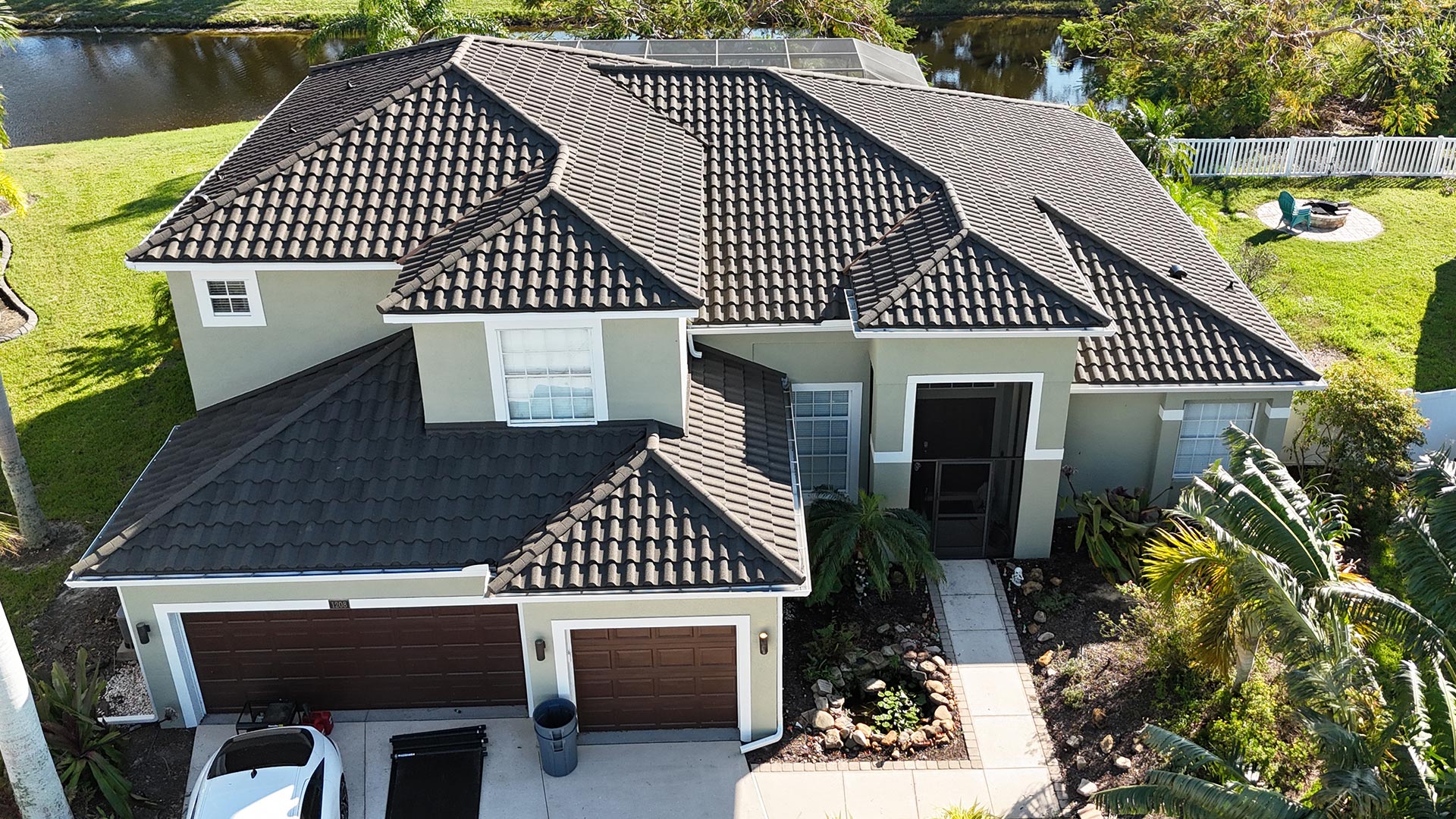
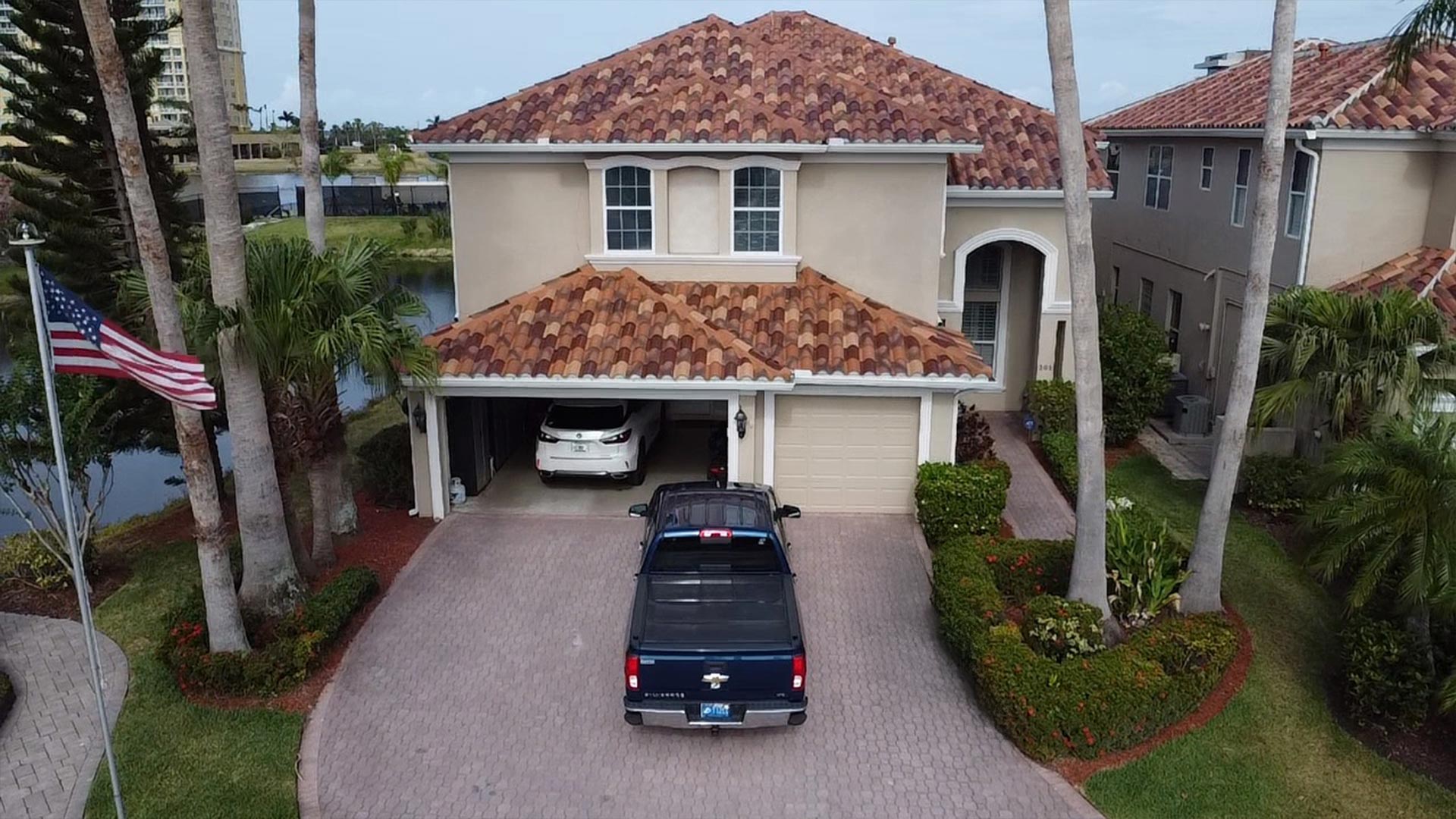
Tile and slate roofing systems dominate Isleworth’s residential landscape due to their longevity (50+ years for concrete tile, 75-100 years for natural slate), wind resistance up to 180 mph when properly installed, and Mediterranean aesthetic that complements the community’s architectural character.[8] However, these systems weigh substantially more than asphalt shingle alternatives — concrete tile averages 850-950 pounds per square (100 square feet), while slate can exceed 1,500 pounds per square. Structural framing must support these loads through properly sized rafters, adequate bracing, and engineered truss systems. Contractors lacking tile or slate installation experience often underestimate structural requirements or use incorrect attachment methods that lead to tile slippage during wind events.
Metal roofing systems, particularly standing-seam and architectural panel profiles, appear on contemporary Isleworth homes and provide comparable longevity (40-60 years) with lighter weight profiles (100-150 pounds per square).[8] Florida Building Code mandates wind resistance testing for all roofing products installed in the High-Velocity Hurricane Zone, which includes Orange County. Metal roofing panels must achieve Miami-Dade County NOA (Notice of Acceptance) approval and include engineered fastening schedules based on building height, roof slope, and exposure category.
The architectural review process adds 2-4 weeks to project timelines and requires contractors to provide material manufacturer specifications, installation method statements, and photographic examples of previous work on comparable properties. Contractors unfamiliar with Isleworth’s review procedures often submit incomplete applications that delay project starts and frustrate homeowners navigating strict community governance protocols.
What Roofing Services Are Available in Isleworth, FL?
Licensed roofing contractors serving Isleworth provide residential roof replacement and repair, commercial roofing for the community’s clubhouse and amenity facilities, solar panel integration, and insurance claim assistance following storm damage. Service availability varies by contractor specialization — not all roofing companies maintain the technical expertise, specialized equipment, and manufacturer certifications required for tile, slate, and metal installations common in this market segment.
Residential roofing services include complete tear-off and replacement of aging roof systems, repair of isolated damage such as broken tiles or displaced flashing, preventive maintenance inspections, and re-roofing over existing systems where structural capacity and building code allow. Contractors qualified for Isleworth’s estate properties should demonstrate prior experience with complex roof geometries, multiple elevation changes, integrated gutter systems, and coordination with landscape preservation requirements during material staging and debris removal.
Commercial roofing expertise applies to the community’s clubhouse, fitness facilities, and maintenance structures, which typically utilize low-slope or flat roofing systems such as TPO (thermoplastic polyolefin), EPDM (ethylene propylene diene monomer), or modified bitumen membranes. These systems require different installation methods, warranty structures, and maintenance protocols compared to residential steep-slope roofing.
Solar roofing integration combines roof replacement with photovoltaic panel installation, allowing homeowners to coordinate both projects under unified timelines and warranties. Florida’s net metering policies and federal solar tax credits (26% of total system cost through 2033) make solar installations financially attractive, but mounting systems must be engineered for Florida’s wind loads and integrated with roof waterproofing during installation rather than retrofitted afterward.
Insurance claim assistance helps homeowners document storm damage, prepare detailed repair estimates, and navigate claim disputes with insurance carriers. Qualified public adjusters and contractor estimating teams can identify covered damage that homeowners might overlook, but services should be provided on a transparent fee basis rather than through Assignment of Benefits agreements that transfer claim control.
Frequently Asked Questions
How much does a roof replacement cost in Isleworth, FL?
Tile and slate roof replacements in Isleworth typically range from $75,000 to $150,000 depending on roof size, material selection, and structural modifications required. Concrete tile systems average $12-18 per square foot installed, natural slate ranges from $18-30 per square foot, and standing-seam metal costs $14-22 per square foot. Custom estate homes with complex roof geometries, multiple elevations, and imported materials can exceed these ranges.
How long does a roof replacement take in Isleworth?
Roof replacement timelines in Isleworth average 2-4 weeks from permit approval to final inspection, though architectural review committee approval adds an additional 2-4 weeks before work begins. Large estate properties or projects requiring structural modifications can extend to 6-8 weeks. Weather delays during Florida’s summer rainy season (June-September) may add days to outdoor installation schedules.
What roofing materials work in Isleworth’s climate?
Concrete tile, natural slate, and architectural metal roofing provide optimal performance in Central Florida’s climate, offering wind resistance up to 180 mph, Class A fire ratings, and lifespans exceeding 50 years. These materials meet Florida Building Code wind requirements for the High-Velocity Hurricane Zone and align with Isleworth’s architectural standards. Impact-resistant shingles rated Class 4 by UL 2218 may qualify for insurance discounts but appear less frequently in this luxury market.
Do I need a permit for roof replacement in Isleworth?
Yes, Orange County requires building permits for all roof replacements, re-roofing projects that add material layers, and repairs exceeding $500 in value. Permits trigger inspections at tear-off, deck preparation, and final installation stages. Additionally, Isleworth’s architectural review committee requires pre-approval for all exterior modifications, including roofing material changes, color selections, and contractor access logistics.
How do I verify a roofing contractor’s license in Florida?
Visit the Florida Department of Business and Professional Regulation website at myfloridalicense.com, select “Verify a License,” and enter the contractor’s name or license number. Active licenses display current status, issue date, expiration date, and any disciplinary actions. Request the contractor’s license number before scheduling estimates and verify independently rather than relying on copies provided by the contractor.
Choosing a qualified roofing contractor in Isleworth requires verification of state licensing, manufacturer certifications, local operational presence, and demonstrated experience with high-value estate properties. Homeowners who invest time in contractor due diligence protect themselves from warranty gaps, workmanship defects, and financial loss years after project completion. Call (407) 832-3403 or visit https://3mg.com/estimate/ for a free roof inspection from Florida-licensed professionals.
Find 3MG Roofing & Solar on Google Maps for directions to our Winter Park office, or call (407) 832-3403 to schedule your free roof inspection in Isleworth.
Written by the licensed roofing professionals at 3MG Roofing & Solar — Florida Licensed Roofing Contractor (Florida DBPR), GAF Master Elite, GAF President’s Club (Top 2% Nationwide), BBB Accredited A+. Headquartered in Winter Park, FL. Updated May 2026.
Address: 1127 Solana Avenue, Winter Park, FL 32789
Phone: (407) 832-3403
Hours: Monday-Friday, 8:00 AM – 5:00 PM
Service Area: Isleworth and the Greater Orlando metro
Reviews: Read our 658+ Google reviews
References
- National Roofing Contractors Association. https://www.nrca.net/
- Florida Department of Business and Professional Regulation. https://www.myfloridalicense.com/DBPR/
- GAF Master Elite Contractor Program. https://www.gaf.com/
- Florida Roofing and Sheet Metal Contractors Association. https://www.floridaroof.com/
- Insurance Information Institute. Roof Replacement and Storm Recovery Data. https://www.iii.org/
- Florida Senate Bill 76 (2021) – Assignment of Benefits Reform. https://www.flsenate.gov/
- Orange County Building Department. Permitting and Code Enforcement. https://www.orangecountyfl.net/
- Florida Building Code. Wind Speed Requirements and Material Specifications. https://floridabuilding.org/