
Roofing Companies in Lake Mary, FL: Choosing a Licensed, Local Contractor
Lake Mary homeowners evaluating roofing companies should verify Florida state licensing, manufacturer certifications, and local business presence before signing contracts. The right contractor holds verifiable credentials, provides detailed written estimates, and maintains a physical office for warranty service years after installation.
3MG Roofing & Solar provides shingle, metal, tile, and solar roofing in Lake Mary, FL, Orlando, and the surrounding areas.
Written by the licensed roofing professionals at 3MG Roofing & Solar — Florida Licensed Roofing Contractor (Florida DBPR), GAF Master Elite, GAF President’s Club (Top 2% Nationwide), BBB Accredited A+. Headquartered in Winter Park, FL, serving Central Florida homeowners since 2004.
How Do You Evaluate Roofing Companies in Lake Mary, FL?
Evaluating roofing companies in Lake Mary requires verifying state licensing, insurance coverage, manufacturer certifications, and local business presence before signing any contract. Hiring the wrong contractor exposes homeowners to voided manufacturer warranties, hidden water intrusion that surfaces months after installation, and zero recourse when fly-by-night operators disappear after depositing checks.[1]
The cost of hiring an unqualified contractor extends beyond the initial project. Florida’s humid subtropical climate and hurricane exposure demand roofing systems installed to Florida Building Code wind speed requirements — Lake Mary falls within the High Velocity Hurricane Zone requiring specific attachment schedules and materials.[2] Improper installation voids manufacturer warranties that homeowners assume will protect their investment for 25 to 50 years. Water intrusion from failed flashing or improperly installed underlayment causes structural damage to roof decking, insulation, and interior ceilings that costs three to five times the original project to remediate.
A qualified Lake Mary roofing contractor provides transparent documentation at every stage: detailed written estimates itemizing materials by manufacturer part number and labor by square footage, certificates of insurance naming the homeowner as additional insured, and manufacturer certification letters proving factory training. Homeowners should request references from projects completed 3-5 years ago to verify warranty service and long-term performance. The evaluation process protects both the immediate investment and the roof system’s performance over its full service life.
What Licensing Should a Lake Mary Roofing Contractor Hold?
Florida law requires roofing contractors to hold an active state license issued by the Florida Department of Business and Professional Regulation (DBPR), plus general liability and workers’ compensation insurance. Homeowners verify license status at myfloridalicense.com by searching the contractor’s name or license number — active licenses display current status, disciplinary history, and coverage limits.[3]
Florida recognizes two roofing license types: Certified Roofing Contractors can work statewide, while Registered Roofing Contractors operate within single counties. Lake Mary homeowners should confirm the contractor’s license classification matches the project scope and verify the business address listed on the license corresponds to a physical office location. Out-of-state contractors must obtain Florida licensure before performing work — no reciprocity agreements exempt this requirement.
Beyond state licensing, manufacturer certifications indicate factory-trained installation crews and access to extended warranty programs. GAF Master Elite certification requires background checks, financial stability reviews, and ongoing training — only 3% of roofing contractors nationwide qualify.[4] Owens Corning Platinum Preferred and CertainTeed SELECT ShingleMaster programs offer similar third-party validation. These certifications unlock warranty upgrades that extend coverage from standard 10-year workmanship protection to 25 or 50 years, transferable to future homeowners and protecting resale value.
Insurance verification protects homeowners from liability. Request certificates of insurance directly from the contractor’s insurance agent, not photocopies the contractor provides. Florida’s state minimum is $300,000 per occurrence, though most reputable contractors carry $1 million or more, while workers’ compensation protects homeowners if crew members suffer injuries on the property. Contractors operating without workers’ compensation expose homeowners to lawsuits from injured workers seeking medical expenses and lost wages.
Why Does Local Presence Matter When Hiring a Lake Mary Roofing Company?
Local roofing companies maintain physical offices and establish reputations over decades of service, while out-of-state storm chasers disappear after cashing checks and leave homeowners with no warranty recourse. Lake Mary’s position in Central Florida’s hurricane corridor attracts unlicensed contractors who arrive after named storms, canvas door-to-door, and vanish before the next season.[5]
A local contractor’s business model depends on reputation and repeat referrals within the community. Homeowners verify local presence by visiting the physical office address listed on the DBPR license, checking local chamber of commerce membership, and reviewing Better Business Bureau accreditation with complaint history. Local contractors respond to warranty callbacks within 24-48 hours because their business depends on maintaining community standing. Out-of-state operators provide phone numbers that disconnect and mailing addresses that return undeliverable notices when issues arise months after installation.
Warranty service illustrates the local presence advantage. Manufacturer material warranties remain valid regardless of the installing contractor’s location, but workmanship warranties require the contractor to perform repairs at no charge for 1-10 years after installation. A local contractor with 20 years of operation history will honor that commitment because walking away destroys their referral pipeline. Storm chasers operate on volume economics — maximize revenue during the 6-8 week post-storm window and move to the next affected region before warranty obligations surface.
Local contractors understand regional roofing considerations that transient operators miss. Lake Mary’s established neighborhoods contain housing stock from multiple construction eras with varying code requirements. A contractor familiar with 1980s-era shingle-over-shingle installations recognizes when complete tear-off to decking is necessary rather than applying a third layer that violates current code. Local knowledge prevents costly mistakes that out-of-state crews discover mid-project.
What Red Flags Should Lake Mary Homeowners Watch For?
Door-to-door solicitation, pressure to sign Assignment of Benefits agreements, vague lump-sum quotes, and missing written contracts signal unqualified or predatory roofing contractors. Florida Senate Bill 76, enacted in 2022, reformed Assignment of Benefits practices after insurance fraud schemes cost homeowners billions in inflated premiums.[6]
Legitimate roofing contractors do not cold-call neighborhoods or knock on doors claiming to have “extra materials from a nearby job.” This tactic targets homeowners immediately after storms when stress and urgency cloud judgment. Reputable contractors earn business through referrals, online reviews, and manufacturer certifications — not high-pressure sales tactics. Homeowners who engage with door-to-door solicitors should request licensing documentation, verify credentials with DBPR, and obtain multiple competing bids before committing.
Assignment of Benefits (AOB) agreements transfer the homeowner’s insurance claim rights to the contractor, allowing the contractor to negotiate directly with insurers and file lawsuits without homeowner involvement. While legitimate uses exist, predatory contractors use AOB to inflate claims, perform unnecessary work, and pocket insurance payouts that exceed actual damages. Florida’s 2022 AOB reform requires contractors to provide homeowners with detailed disclosure forms explaining their rights and the consequences of signing. Homeowners should never sign AOB agreements at the door or under time pressure. Insurance companies recommend filing claims directly and maintaining control over the settlement process.
Vague lump-sum estimates that list only total costs without material specifications or labor breakdowns prevent homeowners from comparing bids accurately. Detailed estimates itemize each component: removal and disposal of existing materials by square footage, roof deck repairs by linear foot, underlayment by type and coverage area, shingles by manufacturer SKU and bundle count, flashing by material and location, and ventilation components by unit. This transparency allows homeowners to identify where contractors cut corners — inferior underlayment, inadequate ventilation, or recycled flashing materials that fail prematurely.
Missing written contracts or contracts that arrive only after deposits are paid indicate unprofessional operations. Contracts should specify start and completion dates, payment schedules tied to project milestones (not upfront lump sums), manufacturer warranty registration, and dispute resolution procedures. Florida law allows homeowners a 3-day right of rescission for contracts signed in their homes. Contractors who refuse to provide written agreements or pressure immediate payment forfeit legal protections and signal intent to avoid accountability.
What Are Lake Mary-Specific Roofing Considerations?
Lake Mary’s mature housing stock spanning 1980s to 2010s construction eras requires contractors familiar with evolving Florida Building Code requirements and multiple roofing system types including architectural shingle, tile, and standing seam metal. The city’s corporate-suburban character and higher-end communities in Seminole County present unique material and aesthetic considerations that distinguish it from neighboring Orlando metro submarkets.[7]
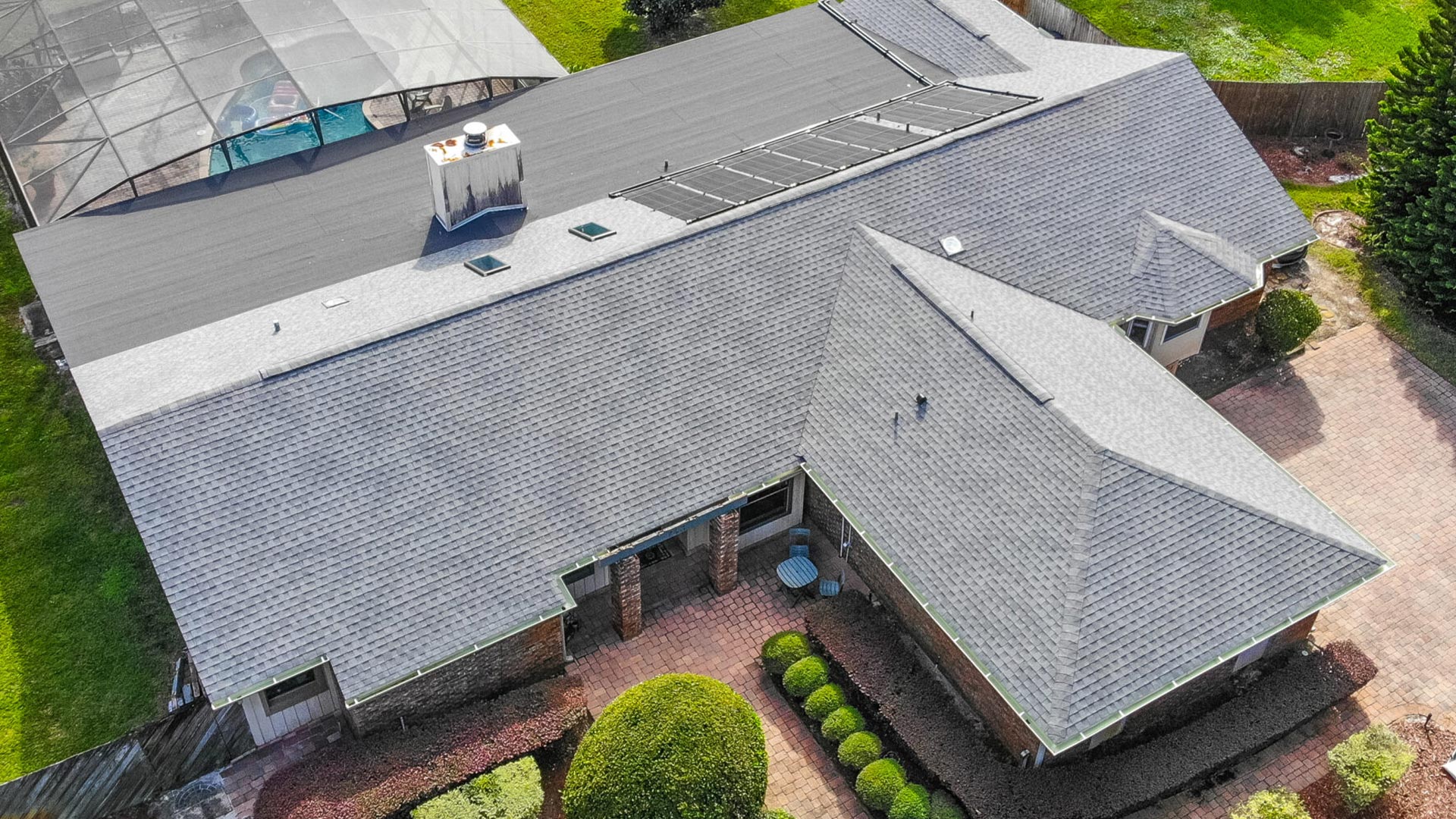
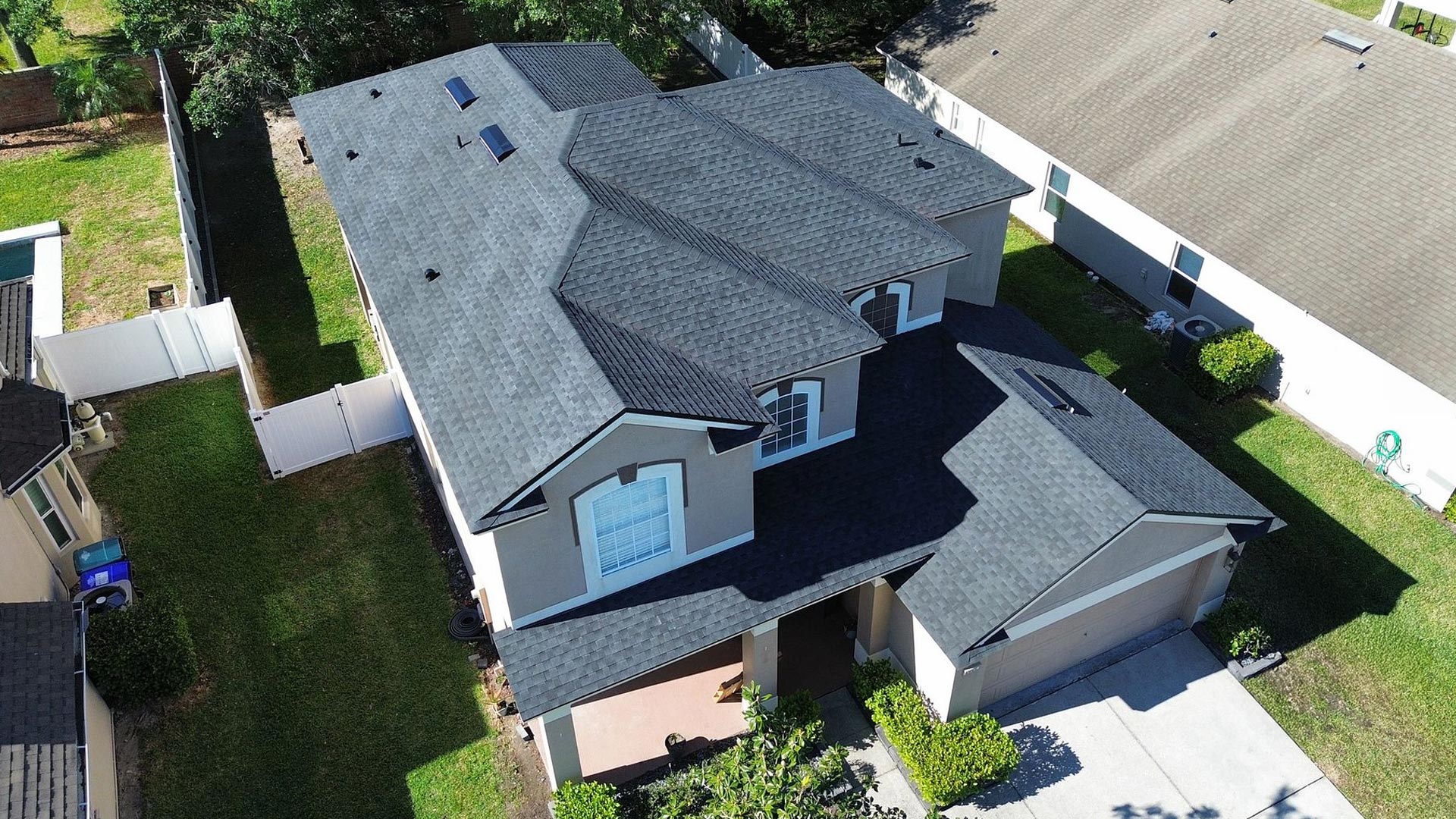
Architectural shingle roofing dominates Lake Mary’s residential landscape, particularly in neighborhoods developed during the 1990s-2000s building boom. These installations face Florida’s intense UV exposure and thermal cycling that degrades organic mat shingles faster than in northern climates. Homeowners replacing 20-25 year old roofs should verify that contractors specify fiberglass-mat architectural shingles rated for ASTM D3462 wind resistance and algae-resistant granule treatments. Lake Mary’s humid climate accelerates algae growth that stains shingles and reduces reflectivity, increasing cooling costs.
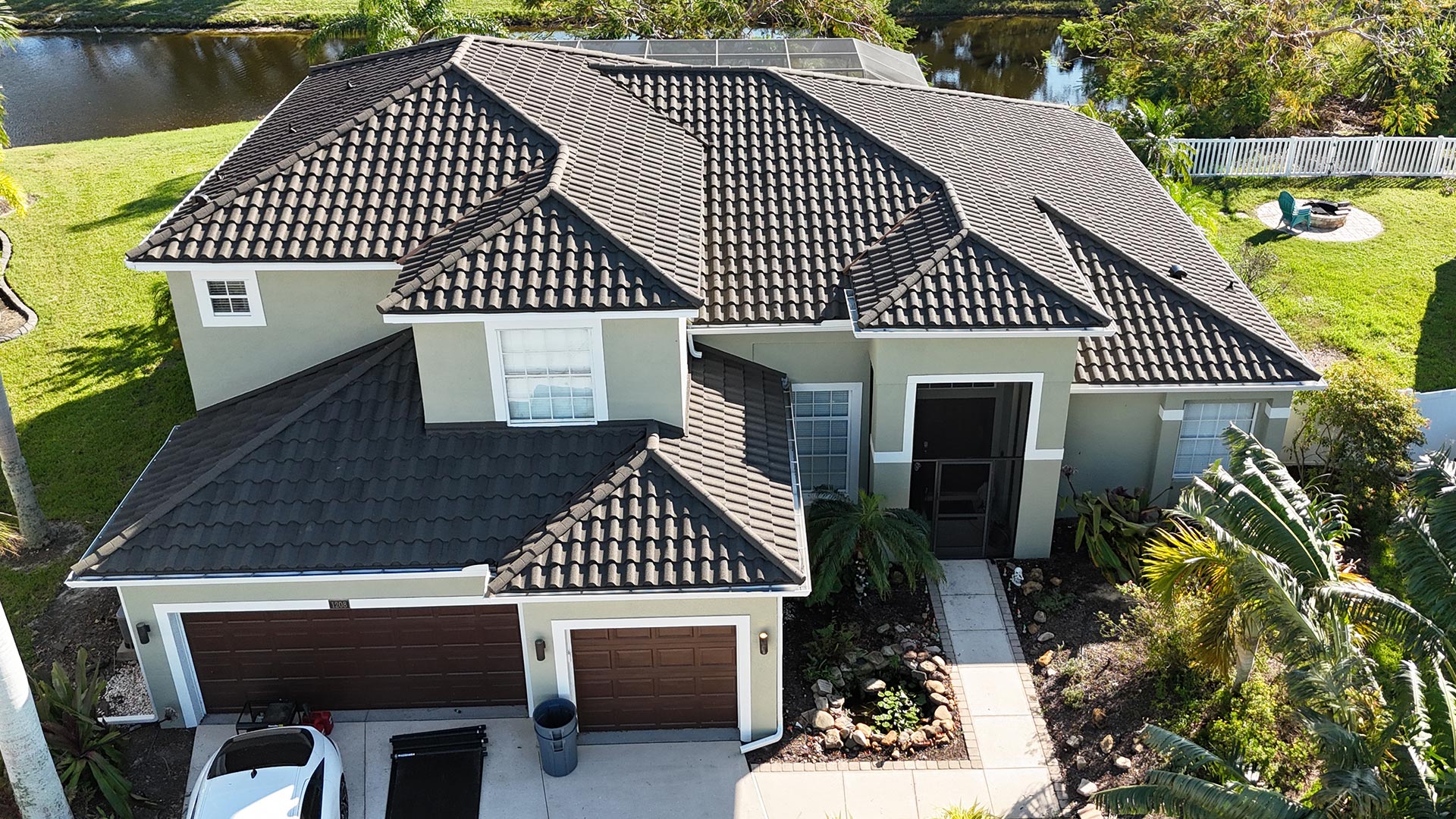
Tile roofing in Lake Mary’s premium communities — concrete and clay profiles — requires specialized installation expertise. Tile systems weigh 800-1100 pounds per square (100 square feet) compared to 250-350 pounds for architectural shingles, necessitating roof deck structural evaluation before installation. Contractors unfamiliar with tile attachment methods cause concealed damage when walking on tiles improperly, cracking units that leak years later. Tile roof maintenance differs fundamentally from shingle systems: underlayment replacement at 20-25 year intervals while tiles remain in place, periodic resealing of ridge caps and hips, and individual tile replacement rather than full system tearoff.
Standing seam metal roofing appears in select Lake Mary districts, valued for 40-60 year service life and superior wind resistance. Metal roof installation requires sheet metal fabrication skills distinct from shingle or tile work. Homeowners considering metal roofing should verify the contractor’s experience with concealed fastener panel systems, thermal expansion joints, and metal-specific flashing details. Improperly installed metal roofs generate noise during thermal expansion cycles and leak at penetration points when contractors apply shingle-roof flashing techniques to metal systems.
Lake Mary’s position in HVAC Zone 2 and Florida Building Code High Velocity Hurricane Zone mandates specific attic ventilation ratios and roof deck attachment schedules. Contractors must provide 1 square foot of net free ventilation area per 150 square feet of attic space, balanced between intake (soffit vents) and exhaust (ridge vents or box vents). Inadequate ventilation traps heat and moisture that warps decking, degrades shingles from below, and drives cooling costs upward. Hurricane-rated attachment requires 6 nails per shingle in the High Velocity Zone compared to 4 nails in standard zones, plus enhanced starter strip fastening and ridge cap reinforcement.
What Roofing Services Are Available in Lake Mary?
Lake Mary roofing contractors provide residential re-roofing, commercial roof systems, emergency storm repairs, insurance claim documentation, and integrated solar roofing installations. Service availability varies by contractor licensing and manufacturer certifications — homeowners should confirm specific capabilities before engaging contractors for specialized projects.
Residential roofing services encompass complete roof replacement (tear-off to deck), overlay installations where code permits, and repair services for isolated damage. Full-service contractors offer multiple material options — architectural shingles from GAF, Owens Corning, or CertainTeed; concrete and clay tile from Boral or Eagle; and metal roofing from manufacturers like McElroy or Berridge. Comprehensive residential services include attic ventilation assessment, roof deck inspection and repair, soffit and fascia replacement, and gutter integration. Homeowners benefit from single-source accountability rather than coordinating separate contractors for interdependent components.
Commercial roofing addresses Lake Mary’s corporate office parks and retail centers with low-slope systems including TPO, EPDM, modified bitumen, and built-up roofing. Commercial projects require different licensing (some states separate residential and commercial credentials), liability insurance minimums, and safety certifications. Commercial roof contractors provide infrared moisture scanning to identify concealed leaks, core sampling for warranty compliance verification, and planned maintenance programs that extend roof service life by addressing minor issues before they cascade into full system failures.
Insurance claim assistance helps homeowners navigate the documentation requirements when storm damage triggers roof replacement. Experienced contractors photograph damage using standardized formats insurers require, prepare detailed loss estimates that match insurance adjuster methodologies, and attend adjuster site visits to ensure accurate damage assessment. Florida’s post-2022 insurance reforms limit certain claim practices, making contractor expertise valuable in securing appropriate settlements without AOB overreach. Contractors familiar with Lake Mary’s insurance market understand which carriers require additional engineering reports for wind damage claims and which accept photographic documentation alone.
Solar roofing integration combines roof replacement with photovoltaic system installation, reducing total project costs by eliminating duplicate mobilization and structural work. Solar-experienced roofing contractors coordinate roof deck reinforcement for panel mounting loads, conduit pathways for electrical runs, and flashing details that maintain roof warranties while supporting solar attachments. Homeowners pursuing solar benefit from contractors who maintain both roofing and solar licensing, ensuring single-source warranty coverage for the integrated system rather than disputed liability when separate contractors blame each other for leaks at panel attachment points.
Ready to evaluate your Lake Mary roofing project with a licensed, certified contractor? Call (407) 832-3403 or visit https://3mg.com/estimate/ to schedule a free roof inspection and detailed estimate.
Frequently Asked Questions
How much does roof replacement cost in Lake Mary, FL?
Roof replacement in Lake Mary typically costs $5.50 to $12.00 per square foot installed, depending on material choice, roof complexity, and current decking condition. Architectural shingle roofs average $8,500 to $15,000 for a standard 1,800-square-foot single-story home, while tile and metal systems cost $18,000 to $35,000 for the same footprint due to material expenses and specialized labor requirements.
How long does a roof last in Lake Mary’s climate?
Architectural shingles last 20-25 years in Lake Mary’s climate when properly installed with adequate attic ventilation. Tile roofs last 40-50 years, though underlayment requires replacement at 20-25 years. Metal roofs provide 40-60 year service life. Florida’s UV exposure, thermal cycling, and hurricane risk reduce northern-climate lifespan estimates by 20-30%.
Do I need a permit for roof replacement in Lake Mary?
Yes, Seminole County requires building permits for all roof replacements in Lake Mary, issued after plan review and paid at the Building Department. Permits ensure code-compliant installation and trigger inspections at deck stage and final completion. Contractors handle permit applications as part of their services, and homeowners should verify permit posting before work begins.
What should a Lake Mary roofing estimate include?
A detailed estimate itemizes removal and disposal costs, roof deck repairs by linear foot, underlayment type and coverage, shingle manufacturer and model with bundle count, flashing materials and locations, ventilation components, and labor broken out by task. It should specify start and completion dates, payment schedule, manufacturer warranty registration, and cleanup procedures.
Can I install a new roof over my existing shingles in Lake Mary?
Florida Building Code permits overlay installations (new shingles over old) only when existing roof layers total fewer than two, decking is sound, and no water damage exists. Most Lake Mary homes built before 2000 already have two layers, requiring complete tear-off for replacement. Overlays void some manufacturer warranties and prevent deck inspection, making tear-off the recommended approach for long-term performance.
- Orlando-area roofing services and service area overview
- Roofing Companies in Winter Park, FL: Licensed Contractor Guide
- Roof Replacement Cost in Orlando: Material and Labor Pricing Guide
- Florida Roof Insurance Claim Guide: Documentation and Process
- Roofing Materials for Orlando Climate: Shingle, Tile, and Metal Comparison
- Residential Roofing Services: Re-Roofing and Repair
Choosing the right roofing contractor protects your Lake Mary home for decades. Verify licensing, check local references, and request detailed written estimates before making your decision. Call (407) 832-3403 or visit https://3mg.com/estimate/ to schedule a free consultation with a Florida-licensed roofing professional.
Find 3MG Roofing & Solar on Google Maps for directions to our Winter Park office, or call (407) 832-3403 to schedule your free roof inspection in Lake Mary.
Written by the licensed roofing professionals at 3MG Roofing & Solar, headquartered in Winter Park, FL. Updated May 2026.
Address: 1127 Solana Avenue, Winter Park, FL 32789
Phone: (407) 832-3403
Hours: Monday-Friday, 8:00 AM – 5:00 PM
Service Area: Lake Mary and the Greater Orlando metro
Reviews: Read our 658+ Google reviews
References
- National Roofing Contractors Association. “Choosing a Roofing Contractor.” https://www.nrca.net/
- Florida Building Code, 7th Edition (2020). “High Velocity Hurricane Zone Requirements.” https://codes.iccsafe.org/content/FBC2020
- Florida Department of Business and Professional Regulation. “Licensee Search and Verification.” https://www.myfloridalicense.com/DBPR/
- GAF. “Master Elite Contractor Certification Program.” https://www.gaf.com/
- Federal Trade Commission. “Hiring a Contractor: Avoiding Storm-Chasing Scams.” https://www.consumer.ftc.gov/
- Florida Senate Bill 76 (2021). “Assignment of Benefits Reform.” https://www.flsenate.gov/
- Insurance Information Institute. “Roof Replacement and Home Insurance.” https://www.iii.org/